
Evan Paules, PhD, Earns Recognition for Research That Could Transform Personalized Nutrition
October 29, 2026
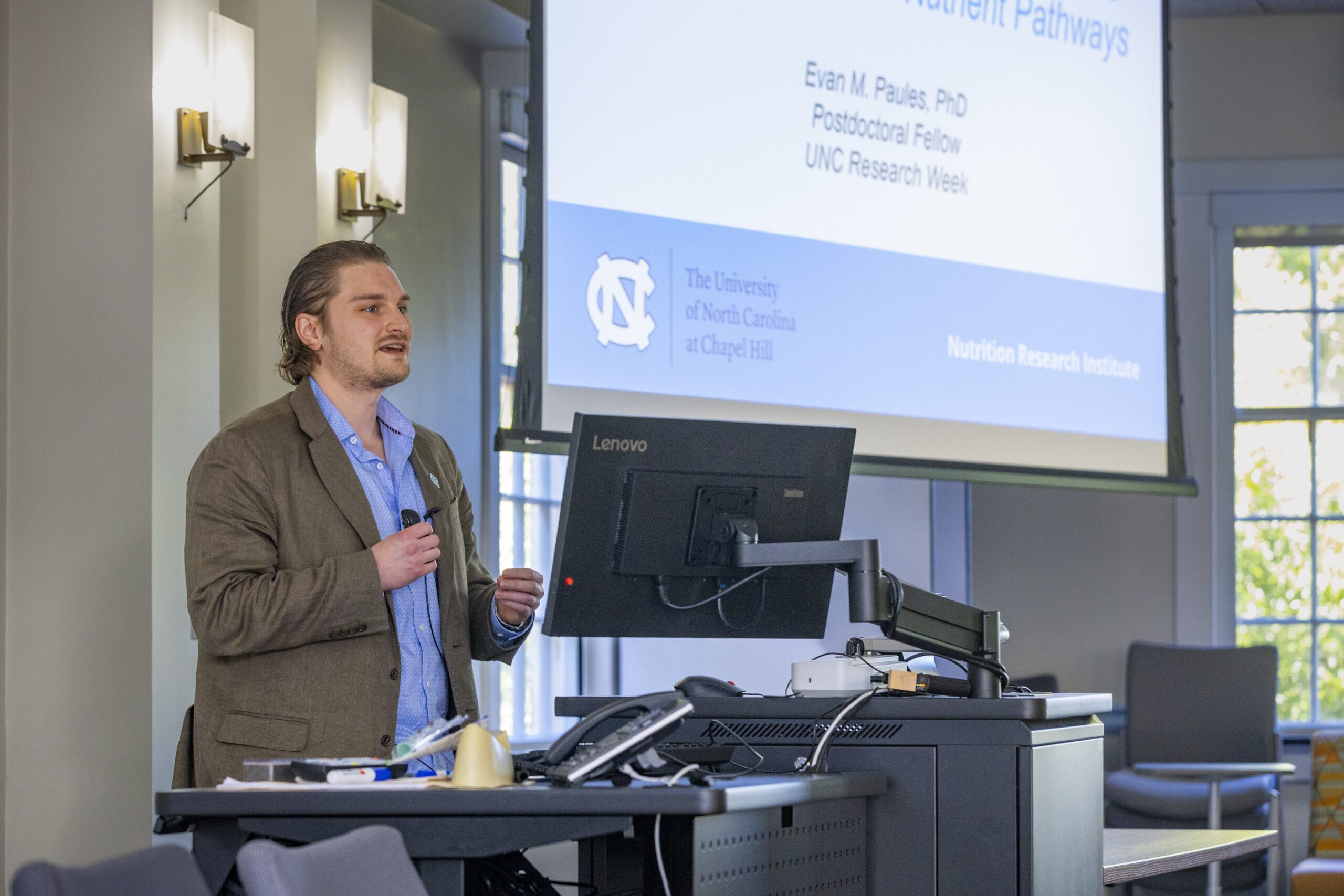
Evan Paules, PhD, is a postdoctoral researcher in the Hursting Lab at the UNC Nutrition Research Institute. His research focuses on obesity, metabolism, and precision nutrition, with an emphasis on understanding why individuals respond differently to dietary interventions. His work explores how biological differences and nutrient metabolism could help inform more personalized approaches to nutrition and weight management.
UNC postdoctoral researcher recognized for research excellence and his pursuit of more personalized approaches to nutrition and health.
Why can two people follow the same diet or weight-loss plan and experience completely different results? For Evan Paules, PhD, a postdoctoral researcher at the UNC Nutrition Research Institute (NRI), answering that question could change how we approach nutrition and weight management. Rather than relying on trial and error, Paules envisions a future in which doctors can use a person's unique biology to determine which dietary interventions and treatments are more likely to work for them. His research is helping lay the groundwork for that future, and his contributions have now earned him a 2026 Postdoctoral Award for Research Excellence.
Paules was one of five postdoctoral scholars selected across UNC-Chapel Hill for the award, which recognizes exceptional research promise and the potential to become a future leader in research and innovation. The awards honor postdoctoral accomplishments in research, leadership, teaching, mentoring, and service. Recipients were recognized during UNC Research Week in October, where they also had the opportunity to present their work to the university's broader research community.
For Paules, the recognition marks another milestone in a scientific career that has developed significantly at the NRI. He arrived in Kannapolis in 2016 as a doctoral student working under NRI founding director Steven Zeisel, MD, PhD, studying the role of the essential nutrient choline in brain development. After earning his doctorate in 2021, he joined the laboratory of Stephen Hursting, PhD, MPH, expanding his research into obesity, metabolism, and the biological factors that determine how individuals respond to dietary interventions.
“I am honored to be one of this year’s recipients,” said Paules. “It is a meaningful reminder to keep trusting my instincts and to stay persistent, especially when the path forward is not always clear. I am grateful for the support and intellectual freedom I have had at the NRI to develop my research direction at the intersection of nutritional metabolism and precision nutrition, a focus that will continue to guide my work. This award reflects not only my own efforts but also the generosity of my mentors, collaborators, colleagues, and family.”
His recent research illustrates why these questions matter. In studies involving genetically diverse mice, Paules and his colleagues discovered that animals on the same calorie-restricted diet lost markedly different amounts of weight. By examining hormones and metabolites, small molecules involved in the body's chemical processes, the researchers identified biological signals linked to how well each animal responded to calorie restriction. Although these findings must be confirmed in humans, they suggest that biological testing could one day help clinicians predict which patients will benefit most from a particular weight-loss strategy before treatment begins.
Paules is also studying how the amount of certain nutrients in the diet can affect metabolic health, particularly choline. In a 2026 study, he and his collaborators found that prolonged choline restriction contributed to insulin resistance in male mice, even without obesity, suggesting that nutrient intake may influence blood sugar regulation independently of body weight. In a recent scientific review, Paules explored emerging connections between choline, obesity, type 2 diabetes, and the potential nutritional consequences of GLP-1 weight-loss medications. Together, these studies seek to explain why people respond differently to diets and weight-loss treatments, and how the nutrients they consume and process may shape their metabolic health. As Paules explained in his award statement, "My goal is to develop nutrient-based tests that help clinicians identify treatments most likely to benefit individual patients."
Beyond the scientific discoveries, Paules' recognition reflects an equally important part of the NRI's mission: preparing the next generation of researchers. His journey from doctoral student to award-winning postdoctoral scientist demonstrates how sustained mentorship, collaboration, and opportunities to pursue new questions can help young investigators develop independent research careers.
“Evan has a remarkable ability to connect complex biological questions with real-world health challenges,” Hursting states. “He's curious, thoughtful, and willing to pursue questions that don't always have straightforward answers. Those are the qualities that distinguish promising young scientists, and I've enjoyed watching him develop his own research direction. This recognition is well deserved, and I look forward to seeing how Evan’s work advances our understanding of metabolism and informs new approaches to improving health.”
As Paules continues exploring the biological differences that shape our responses to nutrition, his work offers a glimpse of a future in which health recommendations are guided less by what works for most people and more by what works for each individual.
Share on Socials
Inspired By What You Read?
NRI scientists are discovering how genes, environment, and microbiome affect our individual requirements for nutrients so that, soon, medical practitioners will be able to guide people in their health from childhood through old age without adding to these tragic numbers. Our critical research depends on the generosity of people like you.