
The Making of a Scientist: Halle Meyers’s NRI Experience
June 3, 2026
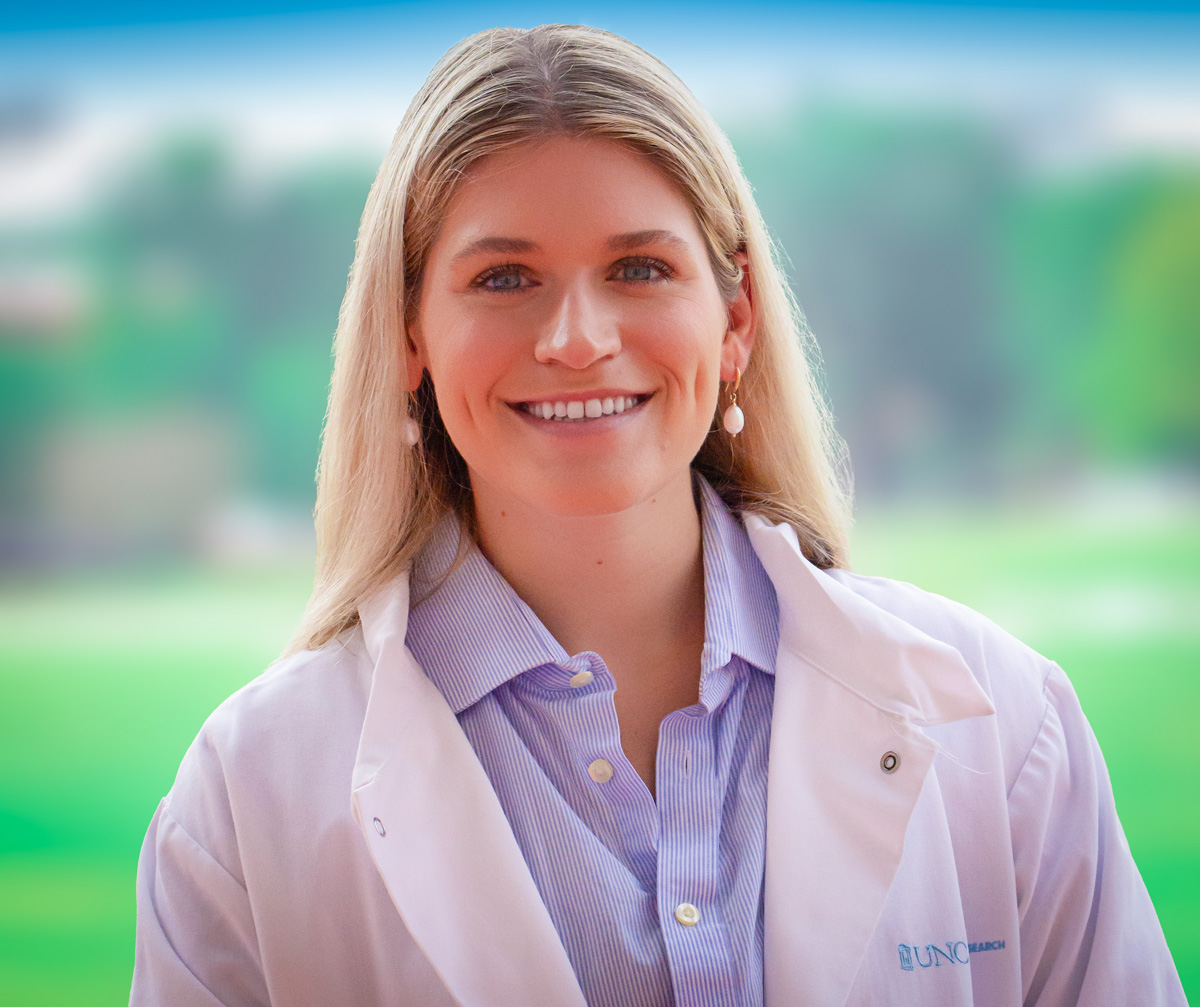
Halle Meyers’s journey at the UNC Nutrition Research Institute began in 2020, when she joined the institute as a 21-year-old research technician in the lab of Sergey Krupenko, MD, PhD. Nearly six years later, she successfully defended her dissertation, earned her PhD in Nutrition from UNC-Chapel Hill, and leaves the NRI with not only scientific expertise, but a deep appreciation for the community and mentorship that shaped her along the way.
Before arriving at the NRI, Meyers said she had little formal background in nutrition science. What she quickly discovered, however, was that the field extended far beyond food choices and dietary advice. She became fascinated by the complex metabolic pathways influenced by nutrients and how those pathways could impact disease prevention and treatment.
Meyers chose the NRI for her doctoral training because of its collaborative environment and unique research campus. She valued the opportunity to regularly interact with students, researchers, and industry scientists from multiple institutions, all working within proximity.
“There are not many places where you get to regularly interact with colleagues in other schools and departments,” she said. “I loved the fact that I could walk next door and grab lunch with a PhD student at NC State and learn about their experiences in their program.”
She also credits the institute’s advanced laboratory facilities and supportive culture with helping her thrive during graduate school. Looking back, Meyers says the NRI was the perfect place to begin her scientific career.
Under the mentorship of Krupenko, Meyers pursued dissertation research focused on ALDH1L1, an enzyme involved in folate (vitamin B9) metabolism. Her work explored how common genetic variations within the ALDH1L1 gene may influence cancer metabolism and cancer cell growth.
The research centered on understanding how subtle differences in a person’s genes can affect the proteins those genes produce and ultimately influence health outcomes. Because ALDH1L1 helps regulate processes involved in DNA and RNA production, the enzyme may play an important role in cancer development and progression.
“Our lab has shown that ALDH1L1 is often silenced in cancer, leading us to believe it plays a big role in cancer metabolism and may operate as a potential tumor suppressor,” Meyers explained. “My research investigated whether there were alterations in cancer metabolism or cancer proliferation depending on specific genetic variations within the ALDH1L1 gene.”
As one of the first investigations into the physiological effects of these common genetic variations, Meyers described the project as highly exploratory and exciting.
“It was exciting working on something that has not really been explored before,” she said.
Throughout her graduate training, Meyers says collaboration played a critical role in both her research and personal growth. She credits Krupenko, postdoctoral researcher Amira Abdellatef, PhD, and other members of the lab for helping bring her work to life.
“It really takes a village to have your research come to life and be published for the world to see,” she said.
Beyond the laboratory, Meyers says the NRI’s culture helped shape her into the scientist she is today. The institute’s approachable environment and strong sense of community made it easier for her to build confidence, develop professional relationships, and navigate the challenges of graduate school.
Now, after defending her dissertation in April 2026, Meyers says the accomplishment feels both rewarding and bittersweet.
“I am excited about this next chapter of my life, but I am also sad about leaving the NRI and all the people I have developed relationships with over the years,” she said. “The NRI was like a family to me for sure.”
As she moves forward, Meyers leaves the NRI not only with a PhD, but with years of collaborative research experience, lasting mentorships, and a foundation that will continue guiding her future in science.
Share on Socials
Inspired By What You Read?
NRI scientists are discovering how genes, environment, and microbiome affect our individual requirements for nutrients so that, soon, medical practitioners will be able to guide people in their health from childhood through old age without adding to these tragic numbers. Our critical research depends on the generosity of people like you.