
UNDERSTANDING THE RESEARCH
WEARABLES AND DIGITAL HEALTH
Health support that adapts.
Science that puts people first.
At the UNC Nutrition Research Institute (NRI), scientists use wearable sensors, mobile apps, and artificial intelligence to build health support that adapts to each person, at the moment it matters.
UNDERSTANDING THE BASICS
How technology connects to everyday health
Explore the tools researchers use to understand daily behavior and test more personal support.
Measuring daily patterns
A closer look at everyday behavior
Wearable devices help researchers measure patterns such as physical activity and sleep while people go about their day. These measurements provide a fuller picture of daily behavior between study visits.
What is a wearable sensor?
A wearable sensor is a device worn on the body, such as a wrist-worn tracker, that measures things like movement, sleep, and other physiologic signals. In research, sensors give objective, continuous measurements instead of relying only on what people remember and report.
Connecting information and support
Research tools that fit into daily life
Research apps can bring tracking, lessons, goals, and feedback together in one place. Information from activity trackers, connected scales, and participant logs can help researchers personalize that support.
Responding to changing needs
The message and the moment both matter
Adaptive support can change its content, timing, or frequency based on a person’s behavior and circumstances. Researchers study when a message may be useful and when another notification may add unnecessary burden.
Testing new approaches
Learning what might make support more personal
Scientists are exploring whether artificial intelligence can make digital support more responsive and personal. Different approaches can help systems learn which messages to select or generate more conversational feedback. Researchers test whether these approaches are useful, safe, and effective.
EXPLORE AN EXAMPLE
What could support look like in the moment?
A useful message depends on the person and the situation. Choose an example to explore how adaptive support might respond.
This demonstration uses simple example rules. It is not a live AI model, a study app, or personalized medical advice. It illustrates research questions about message content, timing, and the option to send no message.
An illustrative response
A small, practical suggestion
The message offers a manageable action at a time the person says support could be useful.
What researchers test
Whether the content and timing of a prompt help people act on their goals.
JUST IN TIME SUPPORT
AGILE
Examines how a mobile weight-management program can support young adults at useful moments. Researchers test how timing, decision rules, and participant preferences should shape personalized messages.
What is the study asking?
Which combinations of intervention components best support weight-loss behaviors? How much should message timing and decision rules adapt to the individual?
Read about AGILE
LEARNING FROM FEEDBACK
ADAPT-RL
Explores reinforcement learning, an AI approach that learns from feedback. A model uses digital health data about diet, activity, and weight to select personalized text messages.
What is the study asking?
Can reinforcement learning improve the messaging delivered in a just-in-time adaptive intervention? The model can also recommend sending no message.
CONVERSATIONAL SUPPORT
AGILE-AI
Is chatbot support feasible, safe, and usable? Researchers also examine its potential to improve engagement and outcomes.
What is the study asking?
Can reinforcement learning improve the messaging delivered in a just-in-time adaptive intervention? The model can also recommend sending no message.
EATING BEHAVIOR SUPPORT
LISTEN
A six-month study testing a digital program to reduce out-of-control eating and support healthy weight management through awareness of hunger and fullness cues.
What is the study asking?
Can a digital program focused on hunger and fullness awareness help women with prediabetes reduce out-of-control eating and improve weight management?
PREDIABETIC HELP
INSIGHT
INSIGHT is an upcoming research study focused on prediabetes. The study will explore ways to support individuals with prediabetes and improve health outcomes through research.
What is the study asking?
Can people with prediabetes improve glucose control by re-learning their signals of hunger and satiety?
This is a 6-month study where we will examine the feasibility of hunger training via continuous glucose monitors for patients with prediabetes and emotional eating.
COMMON QUESTIONS
Digital Health Q&A
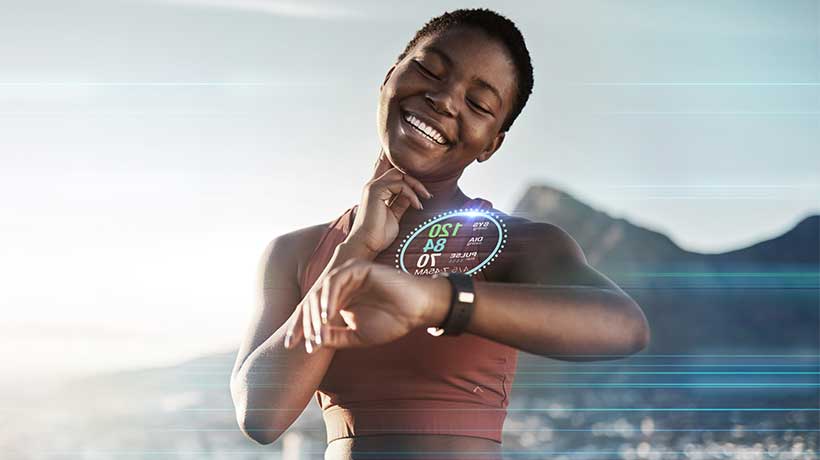
Explore the science behind wearables, apps, and personalized digital support.
How is a research app different from a commercial app?
Research apps are developed to answer specific scientific questions. Investigators test features and measure outcomes to learn which approaches help, for whom, and under what circumstances.
Research example: Living F.R.E.E. Lab CDN article
Can an activity tracker help someone change their habits?
Tracking can make behavior more visible. Researchers study how information from trackers can be paired with goals and feedback to support behavior change.
Source: NRI on Weight-management Apps
Does personalized support mean more notifications?
Not necessarily. Researchers study how to make messages more relevant and better timed.
What happens when someone stops using a health app?
Engagement can change over time. An NRI-featured study identified different patterns of participation in a digital weight-management program. Understanding those patterns may help researchers respond when someone begins to disengage.
Source: NRI on patterns of engagement
Has AI been proven to make these programs better?
That is one of the questions researchers are testing. We are performing studies that examine whether AI can improve message selection or conversational support. Developing an AI feature and demonstrating better health outcomes are separate steps.
How does this connect to precision nutrition?
Precision nutrition examines why people respond differently to foods and dietary approaches. Digital health research adds a practical question: What kind of support helps each person follow an approach over time?
Source: NRI Translational Research
Can I participate in this research?
Study opportunities and eligibility requirements change. Visit the NRI participation page to explore current opportunities and learn how volunteers contribute to nutrition research.
Explore current research studies
MEET THE EXPERTS
NRI Researchers

Rachel Goode, PhD, MPH, LCSW
Associate Professor of Social Work and Psychiatry
Dr. Goode’s research interest includes developing, implementing, and evaluating equitable digital health interventions to treat disordered eating in the context of chronic disease.
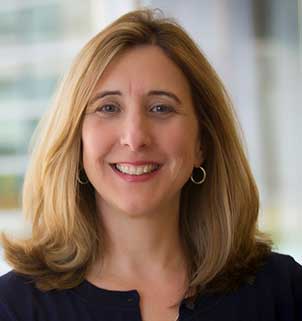
Deborah Tate, PhD
Director, Professor of Nutrition and Health Behavior
Dr. Tate’s research focuses on improving short- and long-term weight management to reduce disease risk and developing programs that use digital and wearable technologies to offer alternatives to clinic-based care.
WHAT THE SCIENCE SAYS
Insights from the NRI
Research news and expert perspectives from the institute.

FURTHER READING
Where to look next
ABC NEWS
JOHNS HOPKINS NEWSROOM
FURTHER READING
Where to look next
ABC NEWS
ABC NEWS
ABC NEWS
JOHNS HOPKINS NEWSROOM
About this guide
This resource provides general information about research on wearable technology, mobile apps, and digital approaches to health and weight management. It is not a substitute for personalized medical advice. Consult a qualified healthcare professional before making changes to your care. References to specific devices, apps, or services do not imply endorsement by the UNC Nutrition Research Institute.
Last reviewed: October 2026
WHY IT MATTERS
Why Precision Nutrition Matters
Everyone responds to food differently. Genetics, metabolism, lifestyle, environment, and the microbiome all influence how nutrients affect our health. Precision nutrition helps researchers move beyond one-size-fits-all advice toward approaches designed around the individual.
Stay Connected to NRI Research
Get the latest research news, expert insights,
and upcoming events delivered to your inbox.