
Choline, GLP-1s, and the Future of Precision Nutrition
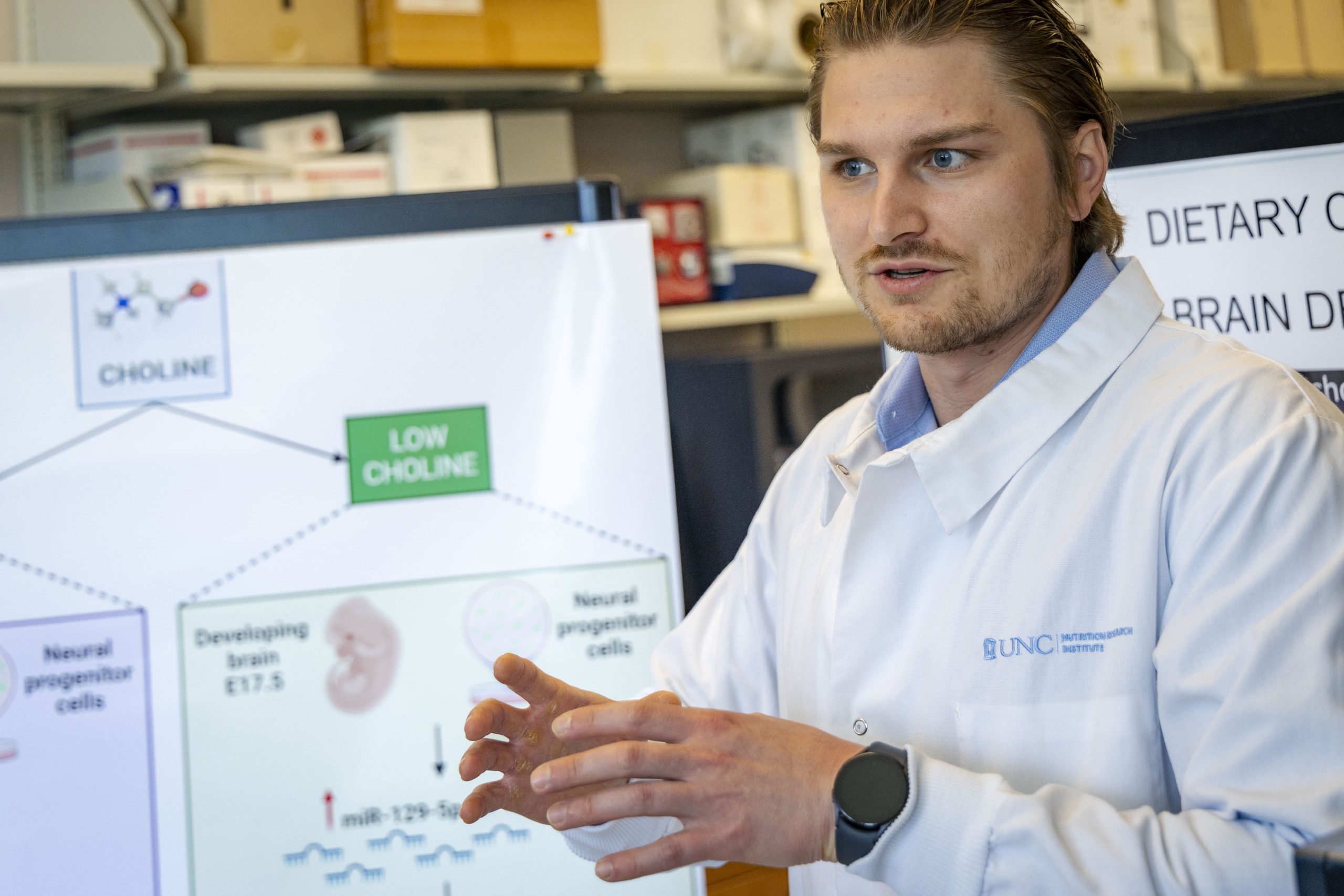
Isis Trujillo-Gonzalez, PhD, is an Assistant Professor at the University of North Carolina at Chapel Hill’s Nutrition Research Institute (NRI). She joined the NRI in 2015 to conduct her postdoctoral research under Steve Zeisel mentoring. She earned her PhD in Biomedical Sciences from the National Autonomous University of Mexico (UNAM). Her lab employs molecular and neuroscience methodologies to investigate the impact of choline on brain function and health.
Evan Paules, PhD, joined the NRI in August 2016 as a doctoral student under the mentorship of Dr. Zeisel. Currently a postdoctoral research fellow in the Hursting Lab, Evan is investigating the determinants of heterogenic responses to dietary interventions in individuals. Evan attended Rider University where he graduated with a double major in Biochemistry and Behavioral Neuroscience.
Choline is an essential nutrient involved in brain development, liver function, and how the body processes fats. Yet, despite its importance, scientists still do not have a reliable way to measure whether someone is getting enough. A new perspective article published by researchers at the UNC Nutrition Research Institute highlights why this gap matters and outlines how advancing choline science could strengthen health guidance across the lifespan.
One of the most striking insights from the perspective article is that choline science still lacks a fully validated, widely adopted biomarker that can assess choline status. A biomarker is a measurable indicator—often found in blood or urine—that helps clinicians determine whether someone is meeting their nutrient needs. For nutrients like vitamin D, iron, and B12, these tools are standard and guide medical care, public health recommendations, and research. Choline stands out as an exception.
Understanding the consequences of inadequate choline intake underscores why this limitation is so significant. Choline supports key functions in the body, and when intake is too low, problems can develop silently. Research shows that insufficient choline can contribute to fatty liver, because choline is required to move fats out of liver cells. Low intake has also been linked to muscle damage and disruptions in memory and cognitive function, since choline is needed to produce the neurotransmitter acetylcholine. During pregnancy, inadequate choline can impair fetal brain development. Without a biomarker to detect early signs of deficiency, these effects may go unnoticed, which makes precise measurement a critical need in public health.
The article also emphasizes that choline requirements are not one-size-fits-all. Life stage, genetics, metabolic health, and dietary patterns influence how much choline the body needs. Pregnancy, for example, is a period of exceptionally high demand, as choline supports fetal brain development. Yet most women of childbearing age do not meet recommended intake levels. The absence of a clear clinical indicator makes it difficult to determine who may benefit from increased intake, particularly when choline needs shift alongside other nutrients like DHA, leaving clinicians to rely on general recommendations rather than individualized guidance.
An especially timely focus of the review is the growing use of GLP-1 medications—such as semaglutide and tirzepatide—for weight loss and diabetes management. These medications alter how the gut absorbs and processes nutrients, which may unintentionally affect the body’s ability to maintain adequate choline status.
Reduced food intake is just one part of the picture. GLP-1 medications also affect metabolism and may alter gut bacteria, both of which influence how the body uses choline. Individuals with obesity—who already appear to have higher choline requirements—may experience shifting needs as they lose weight rapidly on these medications. The Perspective underscores the importance of studying these interactions so nutrition guidance can remain accurate and safe for a changing population.
Our researchers contend that advancing choline research will depend on two major steps: developing a biomarker that reliably reflects choline status and conducting targeted studies to understand how modern metabolic therapies influence nutrient needs. These efforts are essential for moving toward precision nutrition—an approach that tailors dietary recommendations to the individual rather than assuming everyone requires the same intake.
As the science evolves, the message is clear: choline remains an essential nutrient that plays a fundamental role in human health, yet much about its optimal intake is still unknown. Research from the UNC Nutrition Research Institute is helping fill those gaps, shaping future dietary recommendations and strengthening our understanding of how nutrients, metabolism, and modern medical treatments intersect.
Paules, E. M., Petry, H. G., Sprinkles, J. K., and Trujillo-Gonzalez, I. (2025). Future Directions in Choline: From Neurodevelopment to Cardiometabolic Health. Nutrients, 17(22), 3618. https://doi.org/10.3390/nu17223618