
Advancing Precision Nutrition: NRI Research Featured at CWLC Conference
March 6, 2026
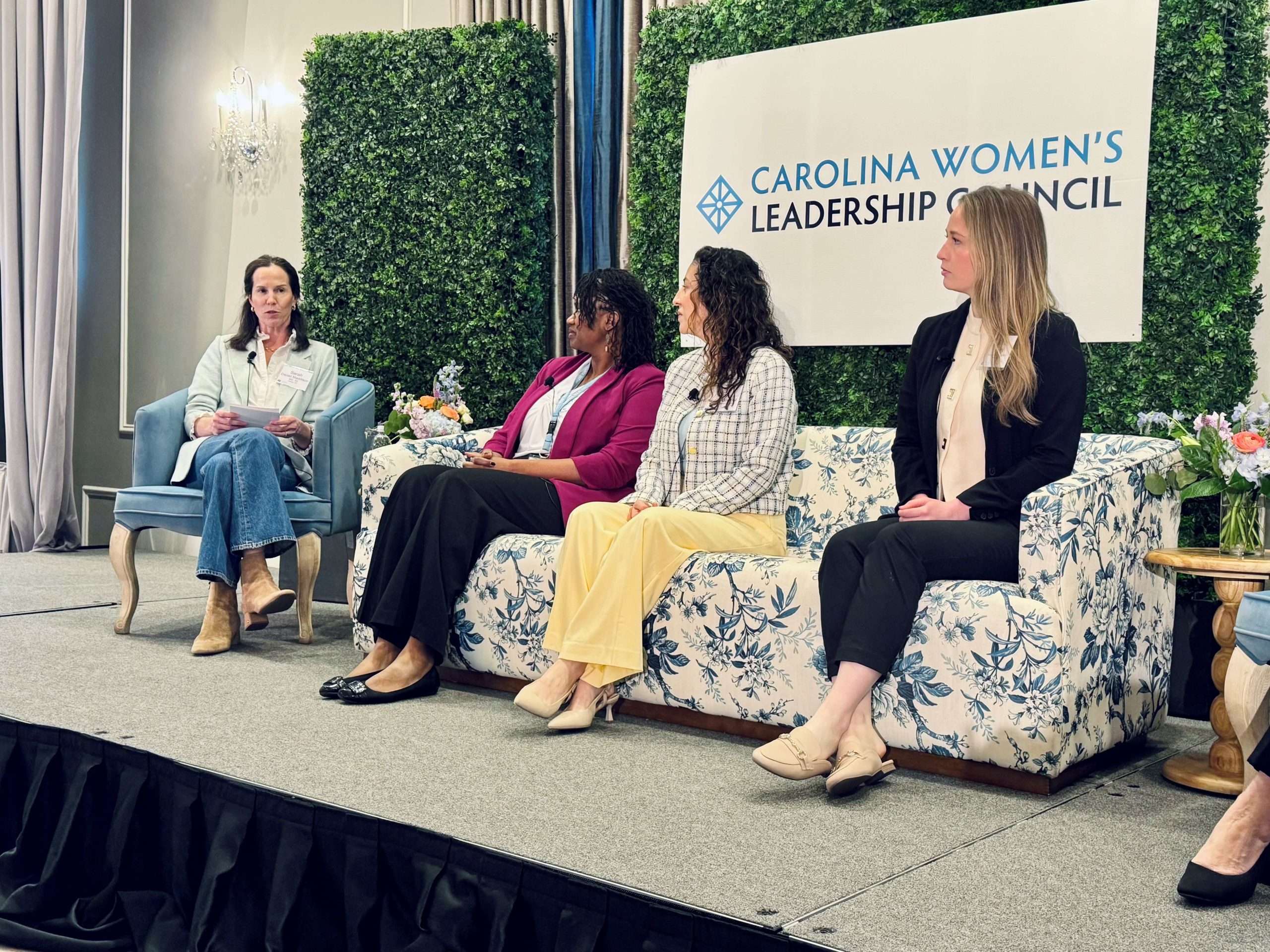
The Carolina Women’s Leadership Council (CWLC) brings together accomplished women leaders from across industries to support innovation, leadership, and scientific advancement at the University of North Carolina. Through events, mentorship, and philanthropy, the council fosters dialogue around emerging research and helps strengthen connections between scientific discovery and community impact.
The UNC Nutrition Research Institute recently participated in the Carolina Women’s Leadership Council Conference, where four NRI scientists shared how precision nutrition is reshaping health research across the lifespan. The discussion offered a science-forward look at how biology, behavior, and early development intersect, and how personalized nutrition strategies are moving from concept to real-world application.
Precision nutrition is grounded in a simple but powerful idea: people do not respond to food in the same way. Deborah F. Tate, PhD, Interim Director of the NRI and Professor of Nutrition and Health Behavior at UNC, described this shift as foundational to the institute’s work.
“At its core, precision nutrition recognizes that people respond to food differently based on their biology, behaviors, and environment,” she said. “Our work allows us to design solutions that are more effective and better aligned with how people live.”
Through digital health tools, wearable technologies, and large-scale studies examining individualized responses to food, Tate’s research connects behavior and metabolism in measurable, actionable ways.
Rachel Goode, PhD, MPH, LCSW, Associate Professor of Social Work and Psychiatry, emphasized that nutrition cannot be separated from emotional health and lived experience. Her research examines how stress, trauma, and caregiving demands influence eating behaviors and long-term metabolic risk. Clinical interventions developed through her work combine appetite awareness training with behavioral support, helping participants maintain weight stability and reduce risk for conditions such as type 2 diabetes and cardiovascular disease.
“Emotional eating is rarely about willpower,” Goode explained. “Precision nutrition helps us understand not only what people eat, but why.”
At the biological level, Isis Trujillo-Gonzalez, PhD, Assistant Professor of Nutrition at the NRI, investigates how micronutrients regulate gene expression and cellular function. Her work focuses on choline, a nutrient critical for brain development and metabolic health. By studying how genetic differences and life stage influence choline metabolism, her research helps explain why similar diets can lead to very different cognitive and metabolic outcomes.
“Essential nutrients like choline participate in several critical pathways in the body, but requirements change across the life course and differ between individuals. Choline is a good example of how nutrition science is beginning to move beyond general recommendations toward more precise guidance, particularly during sensitive life stages such as pregnancy and brain development.”
Graduate researcher Hannah Petry extended this work into early development, examining how prenatal alcohol exposure alters nutrient metabolism during pregnancy. Her findings show that alcohol can divert choline away from pathways essential for healthy gene regulation and brain development, potentially creating a functional shortage even when intake appears sufficient. By identifying these biological shifts, her research contributes to targeted nutritional strategies designed to support fetal growth and cognitive outcomes during vulnerable developmental windows.
Together, the panel reflected the NRI’s integrated model of discovery — bringing behavioral science, metabolism, neuroscience, and molecular nutrition into a unified framework. From real-time digital monitoring tools to laboratory studies mapping gene–nutrient interactions, the institute’s work demonstrates how precision nutrition is advancing more personalized, evidence-based strategies to improve health across the entire lifespan.
The Carolina Women’s Leadership Council is a network of alumnae, parents and friends who are committed to supporting Carolina and mentoring future generations of women philanthropists and volunteers. Council members contribute their time, energy, resources and expertise serving on University boards and championing Carolina in their home regions.
Share on Socials
Inspired
By What You Read?
NRI scientists are discovering how genes, environment, and microbiome affect our individual requirements for nutrients so that, soon, medical practitioners will be able to guide people in their health from childhood through old age without adding to these tragic numbers. Our critical research depends on the generosity of people like you.