
Dr. John Batsis Brings Expertise in Aging, Obesity, and Clinical Research to the NRI
May 20, 2026
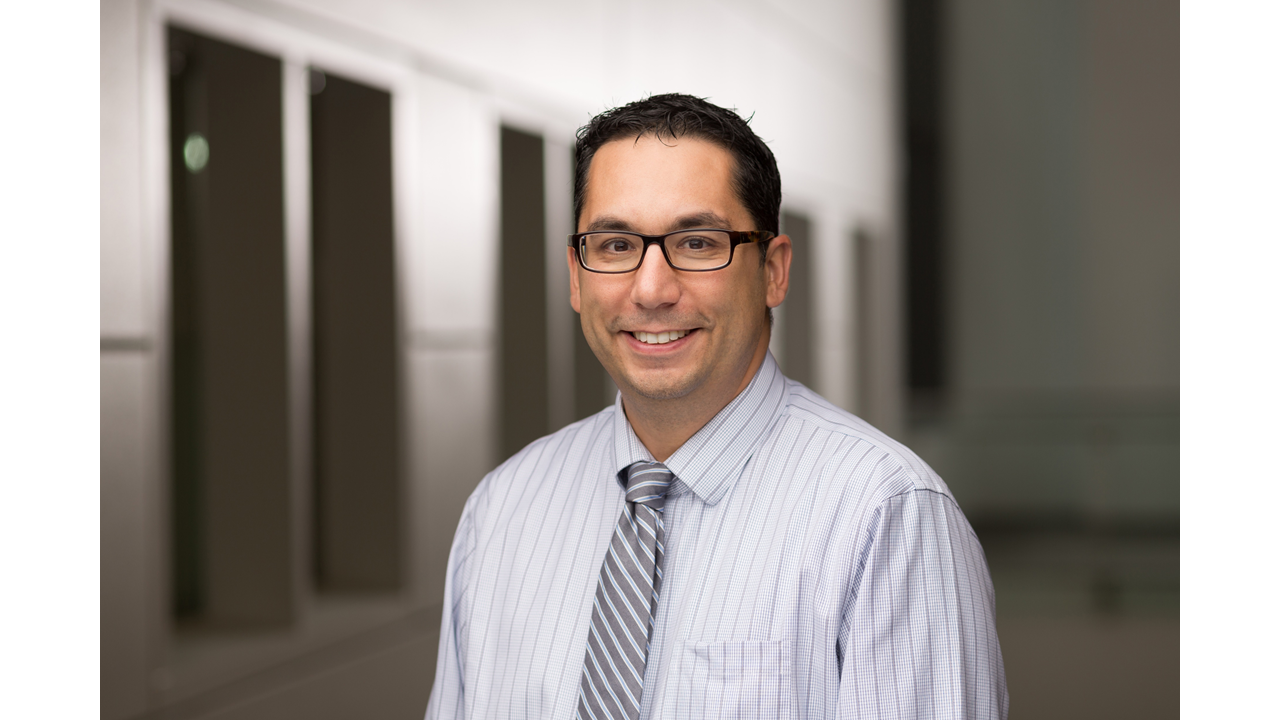
Dr. Batsis has dedicated his professional career to caring for older adults through clinical care, research and education. The privilege of helping older adults maximize their physical function and quality of life through patient-centered, compassionate care serves as a daily motivation in his work. His role as a clinician-researcher allows him to apply scientific principles of inquiry to enhance clinical care for an older adult population. Through learning and discovery, he aims to advance healthy aging by improving goal-directed care and healthcare delivery for older adults.
Precision nutrition research depends on collaboration across disciplines — from clinical care and metabolism to aging and public health. This April, the UNC Nutrition Research Institute welcomed John A. Batsis, MD, as Medical Director of the Clinical Research Core (CRC). A dual-appointed associate professor in the UNC School of Medicine and the UNC Gillings School of Global Public Health, Dr. Batsis brings expertise in obesity, healthy aging, and research focused on patients’ needs.
Dr. Batsis is a physician-scientist whose work focuses on helping adults maintain strength, mobility, independence, and quality of life as they age. His research examines how fat, muscle, chronic disease, and physical function interact, with a particular interest in how obesity treatments and nutrition interventions affect older adults.
“I chose this field because I saw a major gap between what we measure in healthcare and what matters most to patients,” said Dr. Batsis. “In older adults, we often focus on weight, lab values, diagnoses, or medications, but we may not pay enough attention to strength, mobility, physical function, nutrition, and day-to-day independence.”
A major focus of his current research explores how newer obesity medications affect muscle, strength, nutrition, and physical function in older adults. He is also interested in how wearable devices and digital health technologies can help clinicians better measure physical function and improve personalized care.
As Medical Director of the Clinical Research Core, Dr. Batsis sees the CRC as a vital bridge between scientific discovery and studies involving people. The CRC supports human studies at the NRI, helping researchers translate discoveries into real-world interventions and health outcomes.
That work depends on the people who choose to take part in research. Dr. Batsis emphasized that participant involvement is essential to research that reflects real health needs.
“Participants are not simply ‘subjects’ in a study; they are partners who make the research possible,” he said. “If the experience is confusing, burdensome, impersonal, or inconvenient, recruitment and retention suffer. More importantly, we miss the opportunity to build trust.”
He believes successful studies depend on clear communication, respect for participants’ time, and study designs that are practical for people’s daily lives. A positive participant experience not only supports recruitment and retention, but also helps studies better reflect the communities they aim to serve.
Looking ahead, Dr. Batsis sees opportunities to expand the CRC’s impact by strengthening partnerships across UNC and beyond while continuing to build research infrastructure that supports both participants and investigators.
He hopes to help broaden partnerships while supporting innovative studies involving aging, obesity, metabolism, behavioral science, digital health technologies, and personalized approaches to nutrition and healthcare.
For Dr. Batsis, the future of research is not only about scientific discovery, but also about improving people’s everyday lives. By connecting patient care, interdisciplinary science, and participant-focused approaches, he hopes to help the CRC advance studies that are rigorous, practical, and meaningful to the communities the NRI serves. The NRI is excited to welcome Dr. Batsis into this leadership role and looks forward to the perspective he brings to the institute’s growing research efforts.
Share on Socials
Inspired By What You Read?
NRI scientists are discovering how genes, environment, and microbiome affect our individual requirements for nutrients so that, soon, medical practitioners will be able to guide people in their health from childhood through old age without adding to these tragic numbers. Our critical research depends on the generosity of people like you.