
Environment and Nutrition
Beginning at conception, environmental factors in health can accumulate over a lifetime and be from sources as broad as geographic location and economic status to specific external sources including physical activity, occupation, risky behaviors and diet. But some of these factors, especially in terms of diet are highly modifiable.
Important research is now being conducted on this concept of the “exposome,” as an environmental complement to the human genome. NRI researchers are learning how diet and other environmental exposures interact with disease and affect responses to treatment.

Publications
Environment and Nutrition Publications
2020
Precision (Personalized) Nutrition: Understanding Metabolic Heterogeneity. Zeisel S
Perspective: Dietary Biomarkers of Intake and Exposure-Exploration with Omics Approaches. Zeisel S
2019
Obesity and Cancer Metabolism: A Perspective on Interacting Tumor-Intrinsic and Extrinsic Factors. Hursting S
When less may be more: calorie restriction and response to cancer therapy. Hursting S
Energy balance and obesity: what are the main drivers? Hursting S
Metabolic Reprogramming by Folate Restriction Leads to a Less Aggressive Cancer Phenotype. Krupenko S
Early-Life Predictors of Fetal Alcohol Spectrum Disorders. May P
Alcohol’s Dysregulation of Maternal-Fetal IL-6 and p-STAT3 Is a Function of Maternal Iron Status. Smith S
2018
Energy balance and gastrointestinal cancer: risk, interventions, outcomes and mechanisms. Hursting S
Research Strategies for Nutritional and Physical Activity Epidemiology and Cancer Prevention. Hursting S
2017
Metabolic Reprogramming by Folate Restriction Leads to a Less Aggressive Cancer Phenotype. Krupenko S
Contribution of Dietary Supplements to Nutritional Adequacy in Various Adult Age Groups. Zeisel S
2016
CerS6 Is a Novel Transcriptional Target of p53 Protein Activated by Non-genotoxic Stress. Krupenko N
Abnormal Eating Behaviors Are Common in Children with Fetal Alcohol Spectrum Disorder. Smith S
Impact of a western diet on the ovarian and serum metabolome. Sumner S
Metabolomics enables precision medicine: “A White Paper, Community Perspective”. Sumner S
Related News
Dr. Philip May on Time Warner Cable News
February 17, 2016 • Watch an interview with Dr. Philip May on Time Warner Cable News. Dr. May is an expert in the field of Fetal Alcohol Spectrum Disorders (FASD) and the epidemiology of a number of health-related behaviors.
An Interview with Dr. Ideraabdullah
February 17, 2016 • Folami Iderraabdullah is an assistant professor in the Department of Genetics in the UNC School of Medicine and a researcher at the Nutrition Research Institute in Kannapolis. Her research looks at the genetic differences between individuals to determine how the cells in the body respond to changes in diet.
February 2016
Teen Cognition Improves with Choline The Zeisel laboratory at the UNC Nutrition Research Institute (NRI) is well known for defining the importance of the nutrient choline in infant brain development. They discovered that choline in mother’s diet during pregnancy is...
Teen Cognition Improves with Choline
February 1, 2016 • The Zeisel laboratory at the UNC Nutrition Research Institute (NRI) is well known for defining the importance of the nutrient choline in infant brain development. They discovered that choline in mother’s diet during pregnancy is extremely important for optimal brain development in her baby. But, is this the only time in life that choline can improve brain function? Could teenagers eat extra choline to help their school performance?
Green Smoothie
January 28, 2016 • Green Smoothie recipe designed by Chef Mark Allison, Dole Food Company.
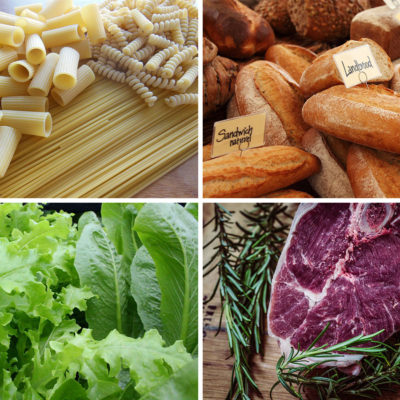
Folate – friend or foe?
January 28, 2016 • Cereal, pasta, bread, cookies – what do they have in common? The answer is “folic acid,” a synthesized form of a naturally occurring B vitamin called folate. Folate occurs naturally in some foods such as green leafy vegetables, avocados, red meat and lentils. Almost any processed food made with flour has folic acid.