
Environment and Nutrition
Beginning at conception, environmental factors in health can accumulate over a lifetime and be from sources as broad as geographic location and economic status to specific external sources including physical activity, occupation, risky behaviors and diet. But some of these factors, especially in terms of diet are highly modifiable.
Important research is now being conducted on this concept of the “exposome,” as an environmental complement to the human genome. NRI researchers are learning how diet and other environmental exposures interact with disease and affect responses to treatment.

Publications
Environment and Nutrition Publications
2020
Precision (Personalized) Nutrition: Understanding Metabolic Heterogeneity. Zeisel S
Perspective: Dietary Biomarkers of Intake and Exposure-Exploration with Omics Approaches. Zeisel S
2019
Obesity and Cancer Metabolism: A Perspective on Interacting Tumor-Intrinsic and Extrinsic Factors. Hursting S
When less may be more: calorie restriction and response to cancer therapy. Hursting S
Energy balance and obesity: what are the main drivers? Hursting S
Metabolic Reprogramming by Folate Restriction Leads to a Less Aggressive Cancer Phenotype. Krupenko S
Early-Life Predictors of Fetal Alcohol Spectrum Disorders. May P
Alcohol’s Dysregulation of Maternal-Fetal IL-6 and p-STAT3 Is a Function of Maternal Iron Status. Smith S
2018
Energy balance and gastrointestinal cancer: risk, interventions, outcomes and mechanisms. Hursting S
Research Strategies for Nutritional and Physical Activity Epidemiology and Cancer Prevention. Hursting S
2017
Metabolic Reprogramming by Folate Restriction Leads to a Less Aggressive Cancer Phenotype. Krupenko S
Contribution of Dietary Supplements to Nutritional Adequacy in Various Adult Age Groups. Zeisel S
2016
CerS6 Is a Novel Transcriptional Target of p53 Protein Activated by Non-genotoxic Stress. Krupenko N
Abnormal Eating Behaviors Are Common in Children with Fetal Alcohol Spectrum Disorder. Smith S
Impact of a western diet on the ovarian and serum metabolome. Sumner S
Metabolomics enables precision medicine: “A White Paper, Community Perspective”. Sumner S
Related News
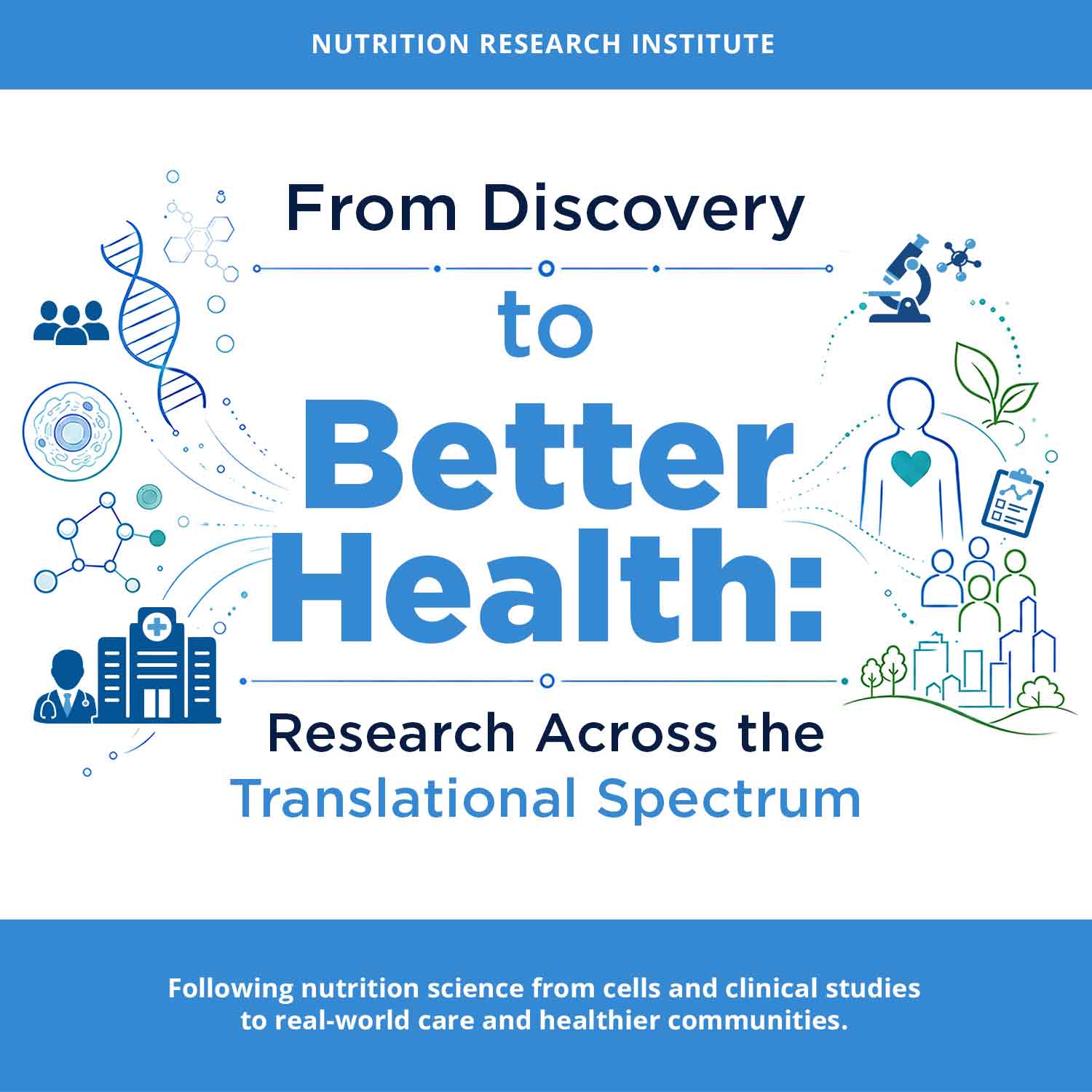
From Discovery to Better Health: Research Across the Translational Spectrum
From Discovery to Better Health: Research Across the Translational Spectrum August 7, 2026 Translational research continuum (noun): A framework that describes the process of advancing scientific discoveries from foundational laboratory research to real-world…
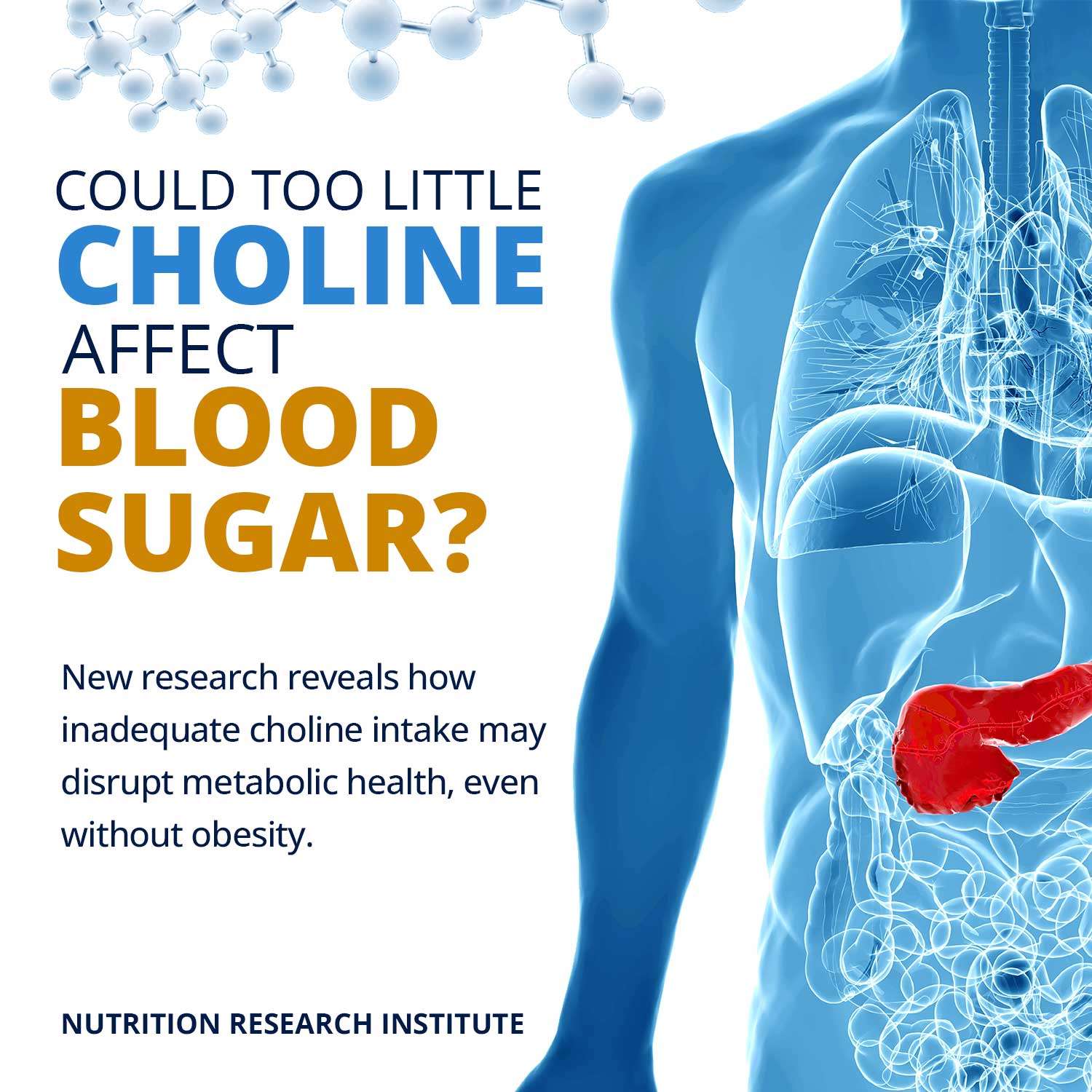
Could Too Little Choline Affect Blood Sugar?
Could Too Little Choline Affect Blood Sugar? August 3, 2026 Isis Trujillo-Gonzalez, PhD, is an Assistant Professor at the University of North Carolina at Chapel Hill’s Nutrition Research Institute (NRI). She joined the NRI in 2015 to conduct her postdoctoral research…
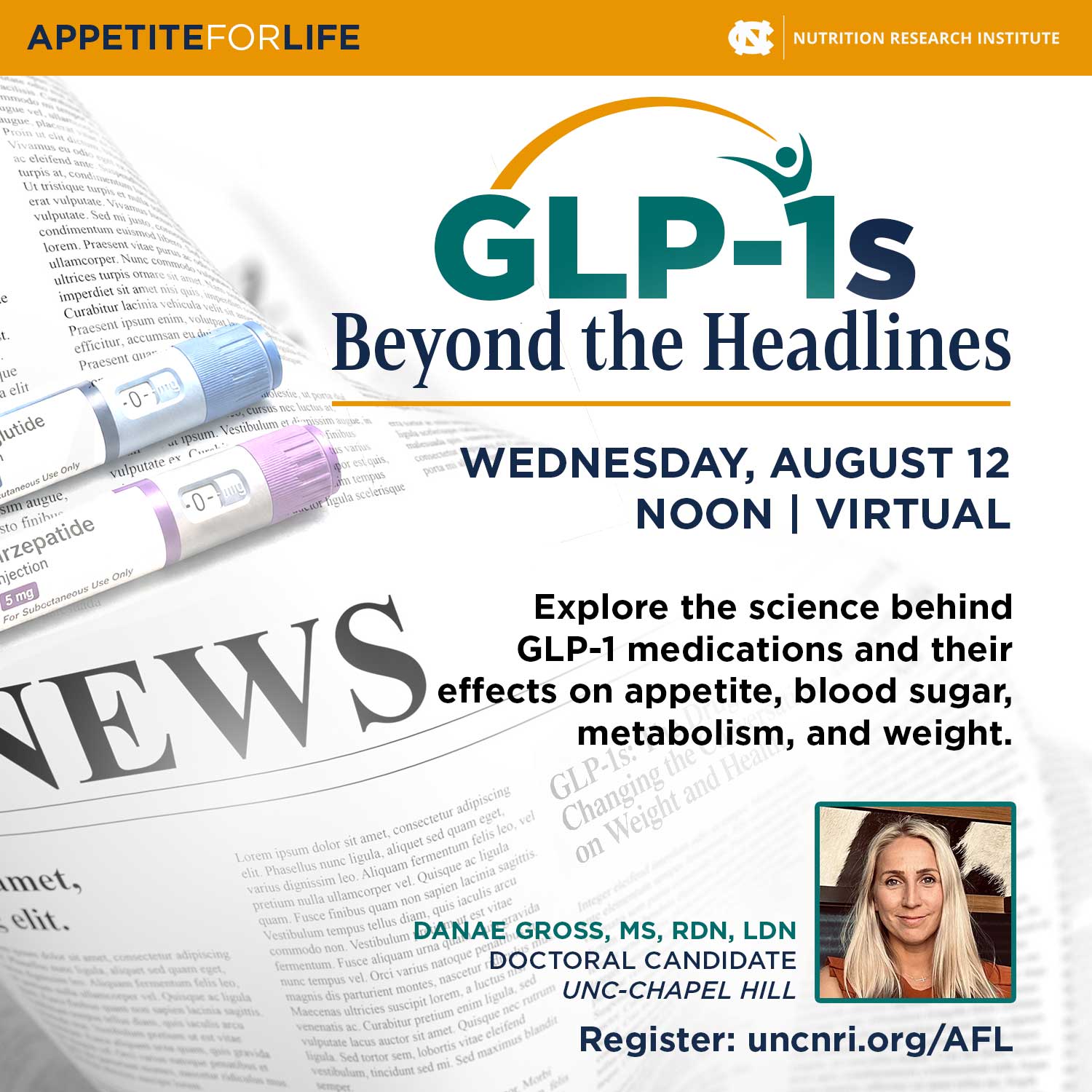
GLP-1s: Beyond the Headlines – Free Webinar
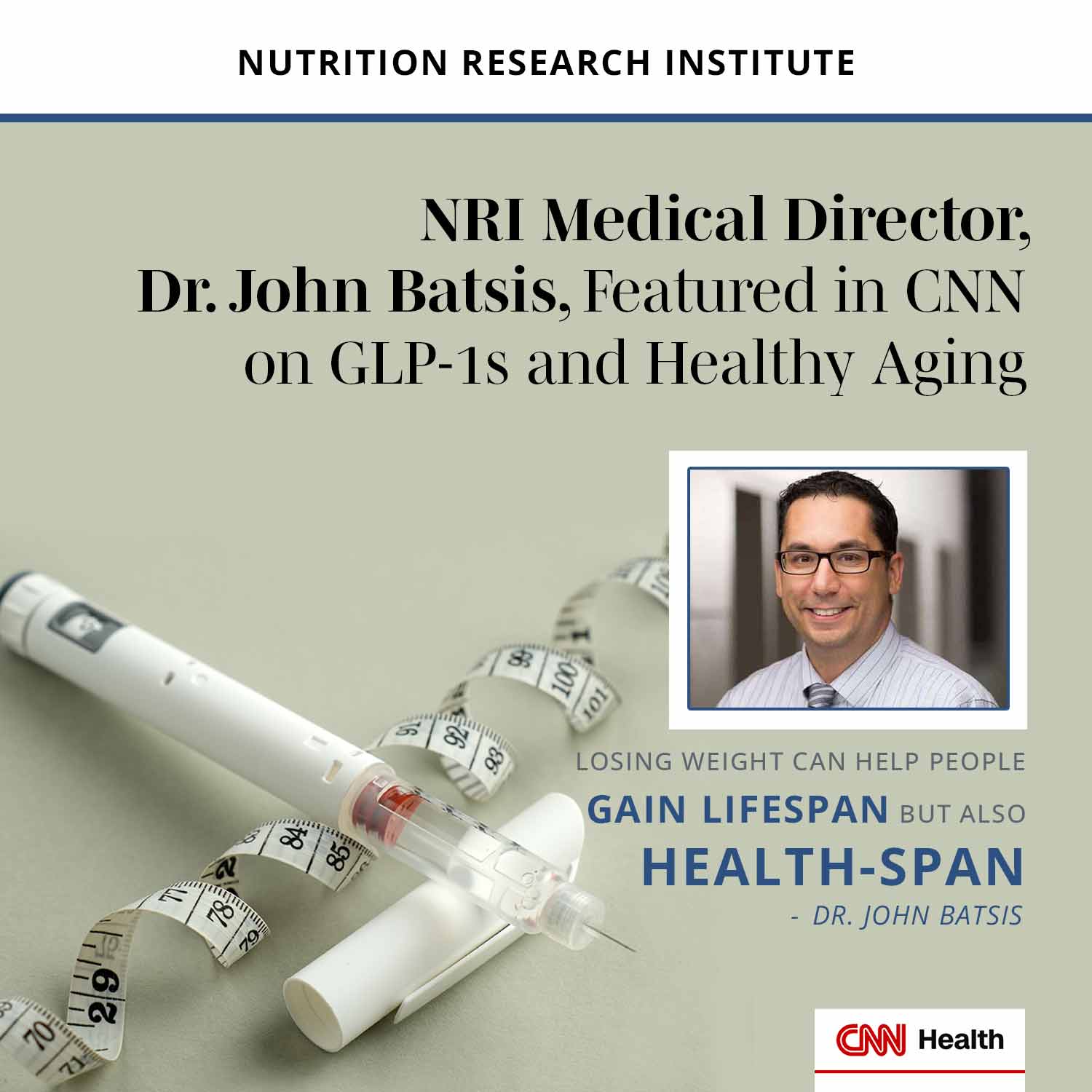
NRI Medical Director Featured in CNN on GLP-1s and Healthy Aging
As GLP-1 medications become more widely available, NRI Medical Director John Batsis, MD, shares expert insight with CNN on what older adults should consider before using them for weight loss. Continue Reading NRI Medical Director Featured in CNN on GLP-1s and Healthy Aging
SummerFest Volunteer/Side Dish Sign Up
SummerFest Volunteer/Side Dish Form 2026 Email This field is for validation purposes and should be left unchanged. Name (Required) First Last Email (Required) I want to: (Required) Bring a Side Dish/Dessert (no chips please) Volunteer…
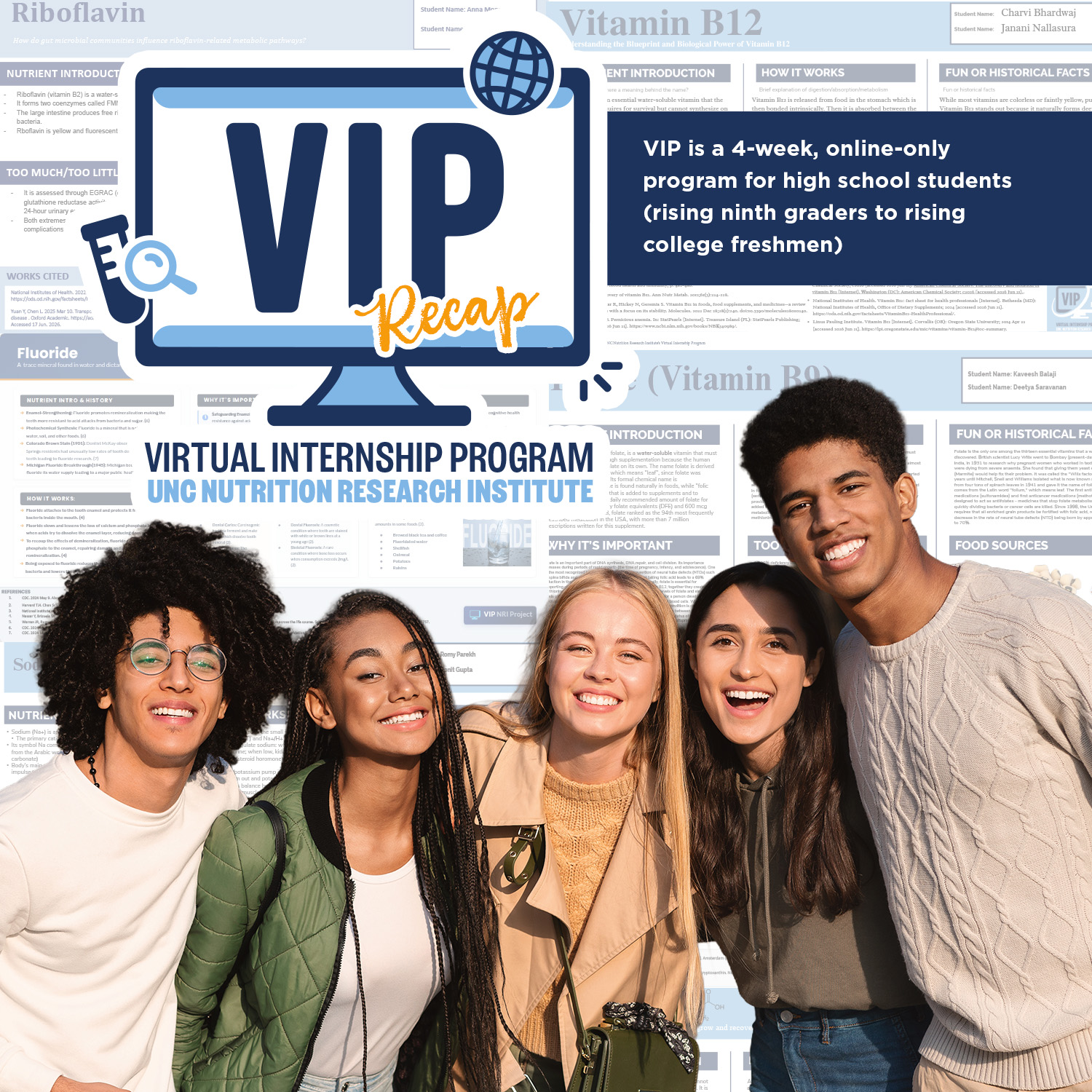
How VIP Helps High School Students Imagine a Future in Science
NRI’s Virtual Internship Program helps high school students explore nutrition research, build science skills and imagine future STEM careers. Continue Reading How VIP Helps High School Students Imagine a Future in Science