
John.Batsis@unc.edu
919-966-5945
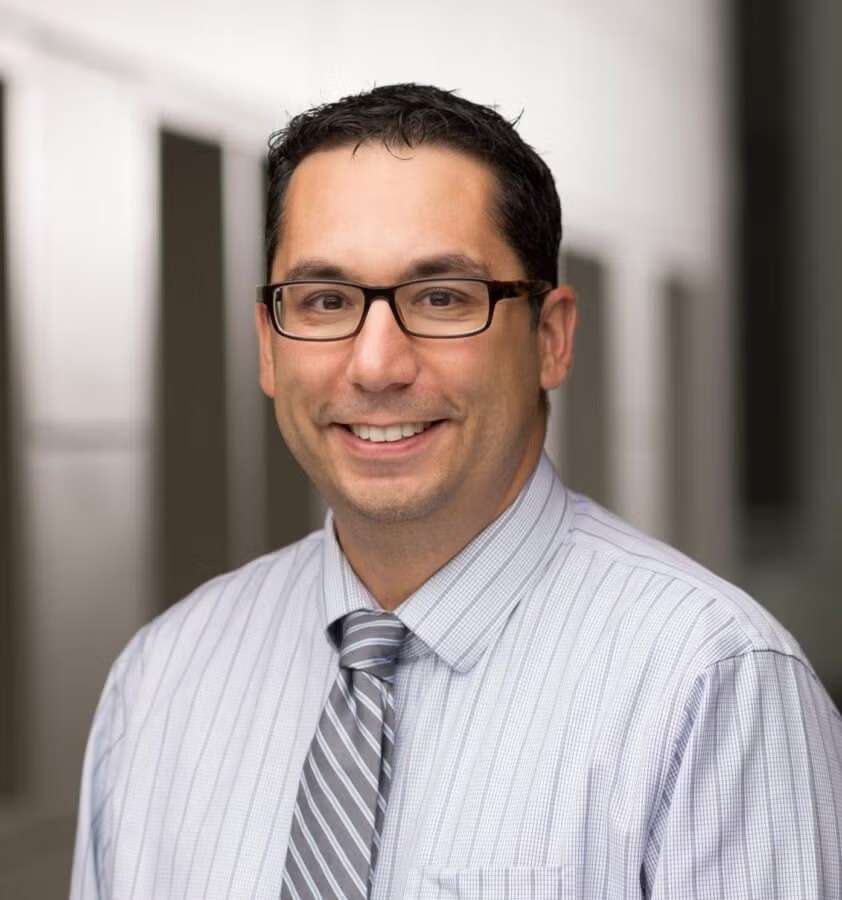
John A. Batsis, MD
CRC Medical Director, Associate Professor of Medicine
Dr. Batsis has dedicated his professional career to caring for older adults through clinical care, research and education. The privilege of helping older adults maximize their physical function and quality of life through patient-centered, compassionate care serves as a daily motivation in his work. His role as a clinician-researcher allows him to apply scientific principles of inquiry to enhance clinical care for an older adult population. Through learning and discovery, he aims to advance healthy aging by improving goal-directed care and healthcare delivery for older adults.
Dr. Batsis’s academic work focuses on three main areas: (a) understanding the relationships between obesity and sarcopenia (loss of muscle mass, strength and/or function with aging) and important outcomes for older adults; (b) developing multicomponent interventions (diet and exercise) to improve physical function in older adults; and (c) using novel technologies (telemedicine, remote monitoring, Internet-of-Things devices) and collaborating with transdisciplinary scientists (engineers and computer scientists) to improve the health and well-being of older adults.
Read: Dr. John Batsis Presents Keynote at AI Technology Center Consensus Guidelines Workshop
Read: Dr. Batsis Presents at American Diabetes Association Annual Meeting
Read: Dr. Batsis talks to Stat about new weight loss drugs
Watch: Dr Batsis – ‘Everyone has their own secret sauce’
Read: Doctors Assess Opportunities Gained, Lost through Medicare’s Annual Wellness Visits
Read: Batsis Discusses Five Common Medications That Can Cause Weight Gain
In the News
Why Iron Man’s mother didn’t drink alcohol during pregnancy
November 27, 2017 -In the Marvel movie Iron Man, Tony Stark (Iron Man) is a genius inventor who creates a suit of armor, giving himself enhanced strength and the ability to fly. Although Tony Stark carries the name “Iron Man” for his suit of metal armor, his name is also an apt description of the abundance of iron that he has in his body, especially in his brain. The human body requires iron to function normally, and without enough iron, adults feel fatigued and have difficulty concentrating. Iron is even more essential during pregnancy. If Tony Stark’s mother had not consumed enough iron during pregnancy, it is unlikely that he would have become a brilliant inventor, because iron is necessary for the proper development of the infant’s brain.
Dr. Zeisel discusses nutrition at November Chamber of Commerce breakfast
November 20, 2017 – Recommending proper nutrition can be difficult because not all people are the same, according to Dr. Steven Zeisel of the Kannapolis-based North Carolina Research Campus. “And that’s why nutrition research has been so frustrating. You read in Newsweek one week that you should drink less coffee and, the next week, you should drink more,” Zeisel said. He said much of the “fuzziness” in nutrition research has come from scientists not knowing why one person responds to a certain nutrient while others do not. That’s why his institute at the Research Campus is trying to be the leading group of faculty asking — and answering — that question.
Nutrition Training for Young Doctors Lacks Bite
October 25, 2017 – Most US medical schools do not require medical students to learn basic nutrition theory, even though poor diet is the leading preventable risk factor for disability or early death in the United States. “It takes at least 25-30 hours of medical school instruction to achieve just basic nutrition competencies,”
What’s Essential for the Prenatal Brain?
October 25, 2017 – An interview with Steven H. Zeisel, MD, PhD, Kenan Distinguished University Professor of Nutrition and Pediatrics, and Director, UNC Nutrition Research Institute, Kannapolis, NC.
“In science, 10 percent of successful scientific discovery is the result of skill and hard work – but 90 percent comes from asking the right question. During my graduate training, I was very lucky to ask the right question. I wondered where the choline in acetylcholine comes from. Acetylcholine is an organic chemical that serves as a neurotransmitter – it’s released by nerve cells and sends signals to other cells, such as in muscles. At the time, all the textbooks stated that people could make their own supply of this nutrient in the liver and did not need to obtain it through food. I knew that this was not true for rats, mice and dogs, and I doubted it was true for people.
Publications
2026
2025
The Relationship Between a Mediterranean Diet and Frailty in Older Adults: NHANES 2007-2017.
Changes in senescence markers after a weight loss intervention in older adults with obesity.
Editorial: Clinical uses and alternative approaches of frailty determination.
Tailoring Obesity Management to Support Physical Function in Older Adults.
Treating Sarcopenic Obesity in the Era of Incretin Therapies: Perspectives and Challenges.
New Drugs and Same Blind Spots-Rethinking Obesity Care in Later Life.