

hursting@email.unc.edu
704-250-5059
Stephen D. Hursting, PhD, MPH
Professor of Nutrition
Dr. Hursting is a Professor of Nutrition at the UNC Nutrition Research Institute in Kannapolis, NC. He is also Professor in the Department of Nutrition and the Lineberger Comprehensive Cancer Center at the University of North Carolina at Chapel Hill. An international leader in the area of nutrition, obesity, metabolism and cancer, his lab focuses on the molecular and metabolic mechanisms underlying obesity-cancer associations, and the impact of obesity- energy balance modulation (eg, calorie restriction and exercise) or pharmacologic agents on cancer development, progression, and responses to chemotherapy. Primarily using genetically engineered mouse models of breast cancer (recently in parallel with several clinical trials), colon cancer and pancreatic cancer, Dr. Hursting has identified the IGF1/Akt/mTOR and NF-kB signaling pathways as key targets for breaking the obesity-cancer link. His publications establish causal links between obesity, cancer and several systemic factors (including IGF-1, insulin, leptin and IL-6) and components of their downstream signaling pathways (including mTOR and NF-kb).
Prior to joining the UNC faculty in 2014, Dr. Hursting was Professor and Chair of the Department of Nutritional Sciences at the University of Texas (UT) at Austin, the McKean-Love Endowed Chair of Nutritional, Molecular and Cellular Sciences in the UT College of Natural Sciences, and Professor of Molecular Carcinogenesis at the UT-MD Anderson Cancer Center (2005-14). Dr. Hursting earned a BA in biology from Earlham College and a PhD in nutritional biochemistry and an MPH in nutritional epidemiology from the University of North Carolina at Chapel Hill. He also completed postdoctoral training in molecular biology and cancer prevention as a Cancer Prevention Fellow at the National Cancer Institute (NCI).
Show MoreDr. Hursting is a Professor of Nutrition at the UNC Nutrition Research Institute in Kannapolis, NC. He is also Professor in the Department of Nutrition and the Lineberger Comprehensive Cancer Center at the University of North Carolina at Chapel Hill. An international leader in the area of nutrition, obesity, metabolism and cancer, his lab focuses on the molecular and metabolic mechanisms underlying obesity-cancer associations, and the impact of obesity- energy balance modulation (eg, calorie restriction and exercise) or pharmacologic agents on cancer development, progression, and responses to chemotherapy. Primarily using genetically engineered mouse models of breast cancer (recently in parallel with several clinical trials), colon cancer and pancreatic cancer, Dr. Hursting has identified the IGF1/Akt/mTOR and NF-kB signaling pathways as key targets for breaking the obesity-cancer link. His publications establish causal links between obesity, cancer and several systemic factors (including IGF-1, insulin, leptin and IL-6) and components of their downstream signaling pathways (including mTOR and NF-kb).
Show MoreHursting’s Team


In the News
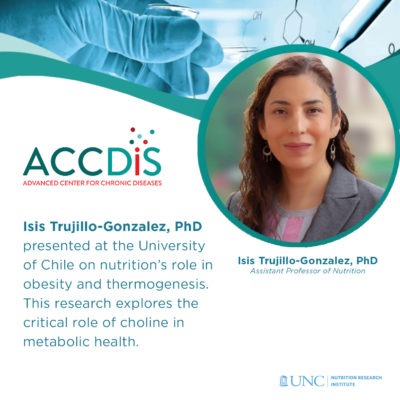
NC to Chile: NRI Research Featured at International Event
On March 14, Isis Trujillo-Gonzalez, PhD, an Assistant Professor of Nutrition at the UNC Nutrition Research Institute (NRI) shared a presentation titled, “Beyond Macronutrients: The Influence of Dietary Choline on Obesity and Thermogenic Regulation” at the Advanced...
Discover the NRI’s Impact: FY24 Report
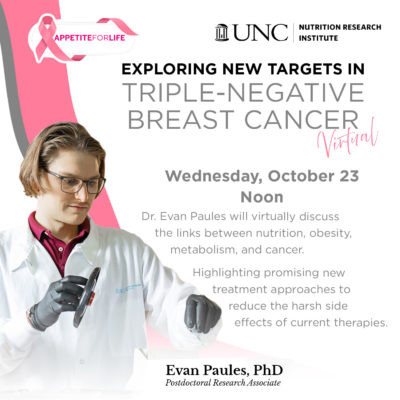
Discover the Nutrition-Cancer Connection | Free Webinar
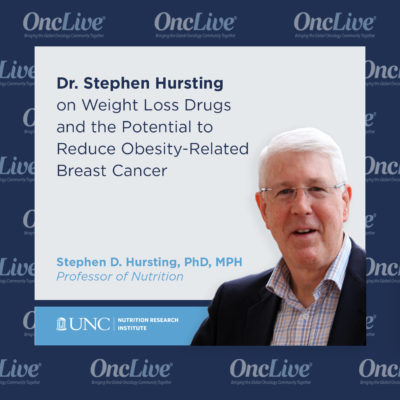
New Insights into Weight Loss Medications and Their Impact on Breast Cancer Risk
This article originally appeared on OncLive.com. Stephen Hursting, PhD, MPH, professor, Department of Nutrition, Lineberger Comprehensive Cancer Center, University of North Carolina (UNC) at Chapel Hill, and professor of nutrition, UNC Nutrition Research Institute,...
Publications
2024
2023
2022
Obesity and Breast Cancer Metastasis across Genomic Subtypes
Reversing the Genomic, Epigenetic, and Triple-Negative Breast Cancer-Enhancing Effects of Obesity
Increased Ammonium Toxicity in Response to Exogenous Glutamine in Metastatic Breast Cancer Cells
2021
Metabolic response of triple-negative breast cancer to folate restriction
Psychometrics of the balance beam test in mice
Mechanistic targets and nutritionally relevant strategies to break obesity-breast cancer links
2020
Cell Intrinsic and Systemic Metabolism in Tumor Immunity and Immunotherapy.
Multi-omics analysis reveals adipose-tumor crosstalk in patients with colorectal cancer< Change in visceral fat and adipocytokines in sedentary obese breast cancer survivors after caloric restriction and rapid escalation of high-volume exercise
2019
2018
2017
When less may be more: calorie restriction and response to cancer therapy.
Energy balance and obesity: what are the main drivers?
Metabolic Reprogramming by Folate Restriction Leads to a Less Aggressive Cancer Phenotype.
2016
Loss of p27 Associated with Risk for Endometrial Carcinoma Arising in the Setting of Obesity. < Obesity-Associated Alterations in Inflammation, Epigenetics, and Mammary Tumor Growth Persist in Formerly Obese Mice.