
John.Batsis@unc.edu
919-966-5945
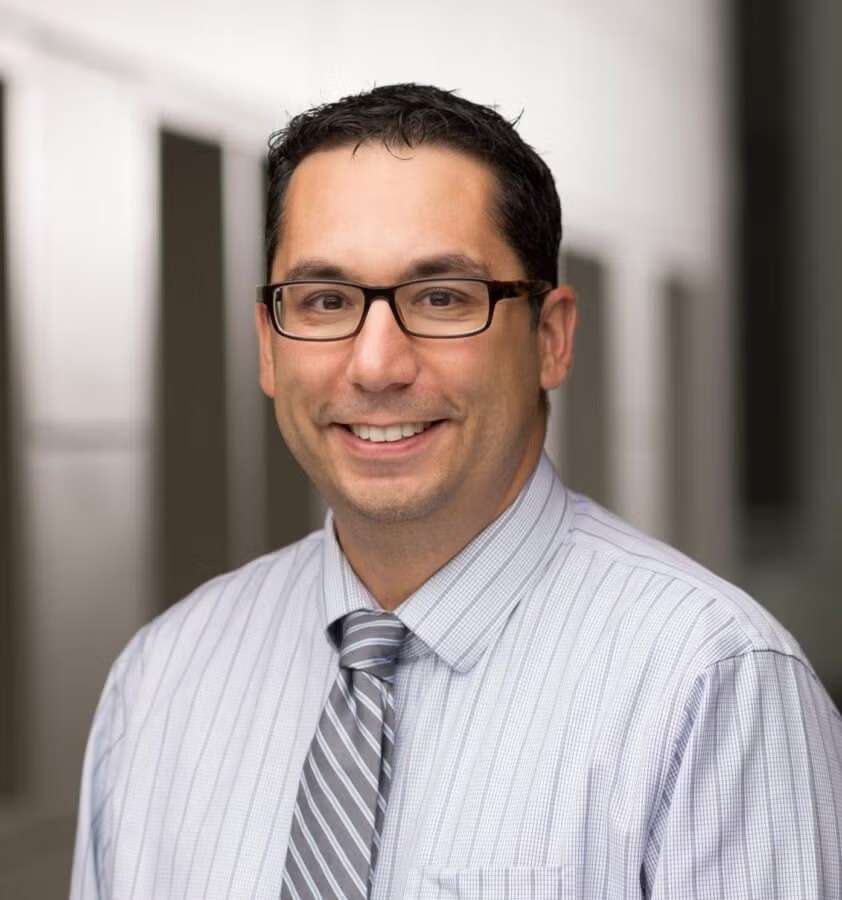
John A. Batsis, MD
CRC Medical Director, Associate Professor of Medicine
Dr. Batsis has dedicated his professional career to caring for older adults through clinical care, research and education. The privilege of helping older adults maximize their physical function and quality of life through patient-centered, compassionate care serves as a daily motivation in his work. His role as a clinician-researcher allows him to apply scientific principles of inquiry to enhance clinical care for an older adult population. Through learning and discovery, he aims to advance healthy aging by improving goal-directed care and healthcare delivery for older adults.
Dr. Batsis’s academic work focuses on three main areas: (a) understanding the relationships between obesity and sarcopenia (loss of muscle mass, strength and/or function with aging) and important outcomes for older adults; (b) developing multicomponent interventions (diet and exercise) to improve physical function in older adults; and (c) using novel technologies (telemedicine, remote monitoring, Internet-of-Things devices) and collaborating with transdisciplinary scientists (engineers and computer scientists) to improve the health and well-being of older adults.
Read: Dr. John Batsis Presents Keynote at AI Technology Center Consensus Guidelines Workshop
Read: Dr. Batsis Presents at American Diabetes Association Annual Meeting
Read: Dr. Batsis talks to Stat about new weight loss drugs
Watch: Dr Batsis – ‘Everyone has their own secret sauce’
Read: Doctors Assess Opportunities Gained, Lost through Medicare’s Annual Wellness Visits
Read: Batsis Discusses Five Common Medications That Can Cause Weight Gain
In the News

Personalized nutrition: A diet for every individual?
February 25, 2019 –Emily started gaining weight when she was in her 30’s, after having two kids and dealing with a stressful job. Her weight gain led to increased blood pressure and higher cholesterol levels. When she visited her doctor, the doctor advised that she change her diet to help her lose weight and improve her cardiovascular health. Emily knew following a diet was difficult, and it took a few false starts for her to follow one consistently.
If Food Is Our Medicine, Why Aren’t We All Healthy?
February 25, 2019 – If you missed February’s Appetite for Life presentation by Mary Ann Lila, PhD, you can catch up. Watch the entire program on video now. The live presentation took place at Forty-Six in Kannapolis on Tuesday, February 12, 2019.
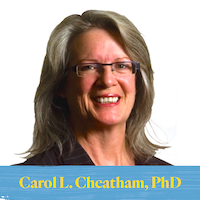
February Faculty Focus: Carol L. Cheatham, PhD
February 11, 2019 – That Carol L. Cheatham, PhD was a scientist was clear to her family early on. At the age of 8 growing up on a farm in rural Wyoming, Cheatham conducted observational studies following the many farm cats around to find out (and diligently record in her notebook) where they would give birth. Once that got boring, she started trying to predict where the litters would be born based on her observations from the previous years.
Celebrating and Preparing in A Milestone Year
January 25, 2019 – As we at the NRI celebrate our tenth anniversary year, we are also taking measures to secure our longevity. Our world-class research facility on the North Carolina Research Campus opened in 2008 with the most advanced equipment, instrumentation, and laboratories available. Now, as we enter a second decade, administrators are evaluating our building, systems, and staffing to ensure that our scientists have the best infrastructure to allow them to continue their quest for new precision nutrition discoveries.
Publications
2026
2025
The Relationship Between a Mediterranean Diet and Frailty in Older Adults: NHANES 2007-2017.
Changes in senescence markers after a weight loss intervention in older adults with obesity.
Editorial: Clinical uses and alternative approaches of frailty determination.
Tailoring Obesity Management to Support Physical Function in Older Adults.
Treating Sarcopenic Obesity in the Era of Incretin Therapies: Perspectives and Challenges.
New Drugs and Same Blind Spots-Rethinking Obesity Care in Later Life.