

John.Batsis@unc.edu
919-966-5945
John A. Batsis, MD
CRC Medical Director, Associate Professor of Medicine
Dr. Batsis has dedicated his professional career to caring for older adults through clinical care, research and education. The privilege of helping older adults maximize their physical function and quality of life through patient-centered, compassionate care serves as a daily motivation in his work. His role as a clinician-researcher allows him to apply scientific principles of inquiry to enhance clinical care for an older adult population. Through learning and discovery, he aims to advance healthy aging by improving goal-directed care and healthcare delivery for older adults.
Dr. Batsis’s academic work focuses on three main areas: (a) understanding the relationships between obesity and sarcopenia (loss of muscle mass, strength and/or function with aging) and important outcomes for older adults; (b) developing multicomponent interventions (diet and exercise) to improve physical function in older adults; and (c) using novel technologies (telemedicine, remote monitoring, Internet-of-Things devices) and collaborating with transdisciplinary scientists (engineers and computer scientists) to improve the health and well-being of older adults.
Read: Dr. John Batsis Presents Keynote at AI Technology Center Consensus Guidelines Workshop
Read: Dr. Batsis Presents at American Diabetes Association Annual Meeting
Read: Dr. Batsis talks to Stat about new weight loss drugs
Watch: Dr Batsis – ‘Everyone has their own secret sauce’
Read: Doctors Assess Opportunities Gained, Lost through Medicare’s Annual Wellness Visits
Read: Batsis Discusses Five Common Medications That Can Cause Weight Gain
In the News
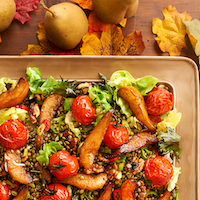
Caramelized Pear, Roasted Tomato and Lentil Salad
December 29, 2017 – This fresh New Year salad combines the natural sweetness of caramelized pear and roasted tomato, with earthy lentils and tender butter lettuce. Finished with lemon zest, olive oil and balsamic vinegar, this elegant salad lends starts the New Year off on a healthy note.
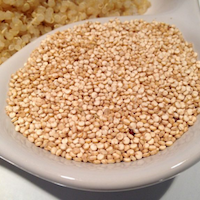
Quinoa Compounds Slow Aging, Improve Metabolic Health in Animal Study
December 27, 2017 – In a collaboration between Rutgers University and the N.C. State University Plants for Human Health Institute (PHHI) at the NC Research Campus (NCRC), scientists used an animal model to show for the first time that quinoa phytochemicals, such as ecdysteroids, may slow the effects of aging and improve metabolic health. Their study was published in the October 2017 edition of the Journal of Functional Foods.
Quinoa Breakfast Bars with Blueberries
December 29, 2017 – A great recipe to get your day started!
Choline: The essential but forgotten nutrient
November 27, 2017 – Perhaps it’s because you don’t see it on nutrition labels yet, but choline — an essential nutrient from conception through old age — tends to be tragically overlooked. According to data from the National Health and Nutrition Examination Survey, only 1 in 10 of us get enough choline, and those percentages drop among women during pregnancy — right when they need it most.
Publications
2026
2025
The Relationship Between a Mediterranean Diet and Frailty in Older Adults: NHANES 2007-2017.
Changes in senescence markers after a weight loss intervention in older adults with obesity.
Editorial: Clinical uses and alternative approaches of frailty determination.
Tailoring Obesity Management to Support Physical Function in Older Adults.
Treating Sarcopenic Obesity in the Era of Incretin Therapies: Perspectives and Challenges.
New Drugs and Same Blind Spots-Rethinking Obesity Care in Later Life.