

John.Batsis@unc.edu
919-966-5945
John A. Batsis, MD
CRC Medical Director, Associate Professor of Medicine
Dr. Batsis has dedicated his professional career to caring for older adults through clinical care, research and education. The privilege of helping older adults maximize their physical function and quality of life through patient-centered, compassionate care serves as a daily motivation in his work. His role as a clinician-researcher allows him to apply scientific principles of inquiry to enhance clinical care for an older adult population. Through learning and discovery, he aims to advance healthy aging by improving goal-directed care and healthcare delivery for older adults.
Dr. Batsis’s academic work focuses on three main areas: (a) understanding the relationships between obesity and sarcopenia (loss of muscle mass, strength and/or function with aging) and important outcomes for older adults; (b) developing multicomponent interventions (diet and exercise) to improve physical function in older adults; and (c) using novel technologies (telemedicine, remote monitoring, Internet-of-Things devices) and collaborating with transdisciplinary scientists (engineers and computer scientists) to improve the health and well-being of older adults.
Read: Dr. John Batsis Presents Keynote at AI Technology Center Consensus Guidelines Workshop
Read: Dr. Batsis Presents at American Diabetes Association Annual Meeting
Read: Dr. Batsis talks to Stat about new weight loss drugs
Watch: Dr Batsis – ‘Everyone has their own secret sauce’
Read: Doctors Assess Opportunities Gained, Lost through Medicare’s Annual Wellness Visits
Read: Batsis Discusses Five Common Medications That Can Cause Weight Gain
In the News
How Diet Enhances Our Natural Anti-Cancer Response
September 28, 2017 One of the ways the body controls the overall number of cells is by initiating a preprogrammed cell death routine, known as apoptosis, in damaged or otherwise unnecessary cells. Apoptosis allows elimination of cells without induction of an autoimmune response. A hallmark of many types of cancer cells is a resistance to apoptosis; hence, tumors continue to grow and metastasize. Finding ways to defeat this resistance in cancer cells is an area of active research.
Polyphenols: Colorful, Healthy, Plant Compounds You May Already Eat & Drink
September 28, 2017 – Many of the foods you eat are loaded with polyphenols: plant-based compounds that are anti-oxidant, anti-inflammatory and anti-infection. Polyphenols are considered non-nutritional, meaning that they help prevent disease and keep you healthy in a different way than vitamins, minerals, or other nutrients like carbohydrates, fats, and protein. David Nieman, DrPH, director of the Appalachian State University Human Performance Lab at the North Carolina Research Campus (NCRC), explains that polyphenols are a type of phytochemical, the colorful chemicals in plants that confer a variety of health benefits. “In many fruits and vegetables, all the colors that you see are the polyphenols,” he says. “That’s what you want, a lot of color in your diet.”
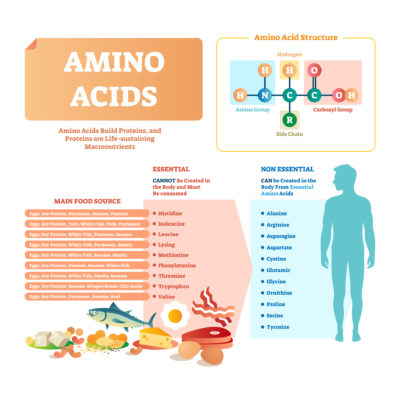
Build Stronger Muscles with All Kinds of Protein
August 28, 2017 – From the desks of Martin Kohlmeier, MD, PhD and Robyn Amos-Kroohs, PhD
Protein is an important part of every cell in the body. Protein is also a building block of enzymes, hormones, and other important substances used in body processes. It’s a major component of most body systems, including the immune system, metabolism, and circulatory system. Its importance is why protein is known as a macronutrient, meaning that large amounts are required to help the body function appropriately on a daily basis. And unlike sugar and fats, macronutrients that have acquired bad reputations, protein is recognized as an important part of a healthy diet.
The Ironies of Iron During Pregnancy
August 28, 2017 – Iron is listed by the American Pregnancy Association as one of the nutrients essential for healthy fetal development. Why? Because a lack of iron, a mineral naturally found in foods like meat, seafood and vegetables, directly impacts the development of the fetal brain. Iron also prevents anemia, low birth weight and premature delivery. Unfortunately, 22 percent of US women in their childbearing years are iron deficient, says Susan Smith, PhD, deputy director of science at the UNC Nutrition Research Institute on the NC Research Campus.
Publications
2026
2025
The Relationship Between a Mediterranean Diet and Frailty in Older Adults: NHANES 2007-2017.
Changes in senescence markers after a weight loss intervention in older adults with obesity.
Editorial: Clinical uses and alternative approaches of frailty determination.
Tailoring Obesity Management to Support Physical Function in Older Adults.
Treating Sarcopenic Obesity in the Era of Incretin Therapies: Perspectives and Challenges.
New Drugs and Same Blind Spots-Rethinking Obesity Care in Later Life.