Microbiome and Nutrition

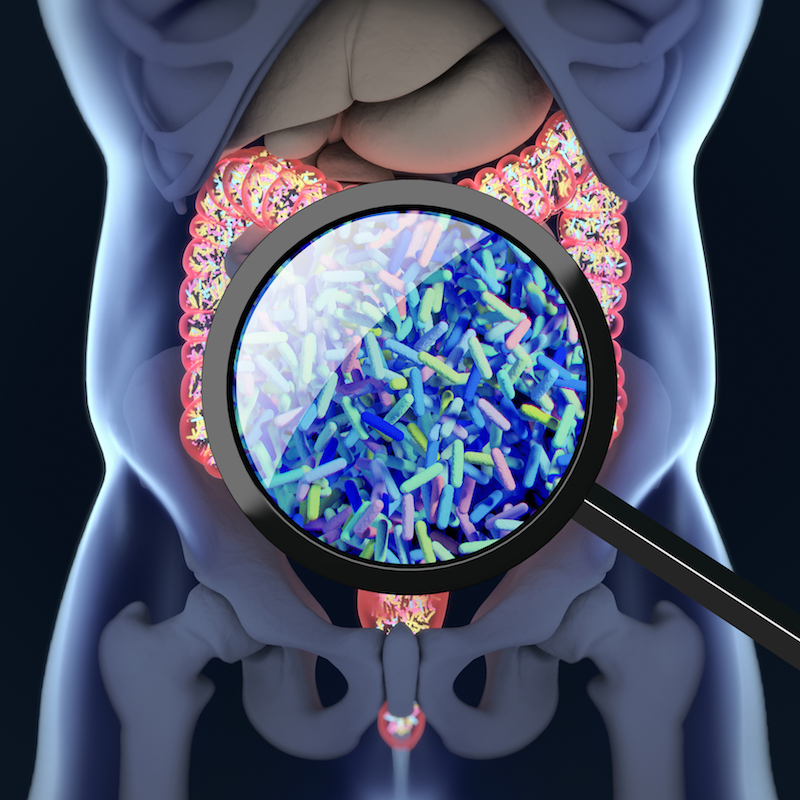
The complex community of bacteria, yeasts and viruses living in our intestines, collectively known as the gut microbiome, is shaped, in part, by what we eat. Genetics, environment, and other factors also influence an individual’s microbial community. Research at the NRI investigates these complex relationships and their impact on disease risk. We use animal models and bioinformatics to study the associations between nutritional metabolites, gut microbiome, and health. What happens in the gut doesn’t stay in the gut. Your microbiome can play a role in cardiovascular disease, obesity and diabetes, and even cancer. Our team envisions a future where analysis of your microbiome can determine disease risk, and medical foods can be prescribed to treat and prevent disease by regulating the microbiome.
Publications


Microbiome and Nutrition Publications

2020

Population studies of TMAO and its precursors may help elucidate mechanisms. Meyer K

2019

Association of dietary patterns with the gut microbiota in older, community-dwelling men.  Meyer K

The impact of early-life sub-therapeutic antibiotic treatment (STAT) on excessive weight is robust despite transfer of intestinal microbes.  Sumner S

Protein Intake at Twice the RDA in Older Men Increases Circulatory Concentrations of the Microbiome Metabolite Trimethylamine-N-Oxide (TMAO).  Zeisel S

2018

Meta-analysis of human genome-microbiome association studies: the MiBioGen consortium initiative.  Meyer K

Human microbiota, blood group antigens, and disease.  Sumner S

2017

Dietary Choline and Betaine and Risk of CVD: A Systematic Review and Meta-Analysis of Prospective Studies.  Meyer K

A Microbiomic Analysis in African Americans with Colonic Lesions Reveals Streptococcus sp.VT162 as a Marker of Neoplastic Transformation.  Sumner S

Metabolic profiling of a chronic kidney disease cohort reveals metabolic phenotype more likely to benefit from a probiotic.  Sumner S

Trimethylamine N-Oxide, the Microbiome, and Heart and Kidney Disease.  Zeisel S

2016

Microbiota-Dependent Metabolite Trimethylamine N-Oxide and Coronary Artery Calcium in the Coronary Artery Risk Development in Young Adults Study (CARDIA).  Meyer K

Diet and Gut Microbial Function in Metabolic and Cardiovascular Disease Risk.  Meyer K

Antibiotic-mediated gut microbiome perturbation accelerates development of type 1 diabetes in mice. Sumner S

Related News
What’s Essential for the Prenatal Brain?

October 25, 2017 – An interview with Steven H. Zeisel, MD, PhD, Kenan Distinguished University Professor of Nutrition and Pediatrics, and Director, UNC Nutrition Research Institute, Kannapolis, NC.
“In science, 10 percent of successful scientific discovery is the result of skill and hard work – but 90 percent comes from asking the right question. During my graduate training, I was very lucky to ask the right question. I wondered where the choline in acetylcholine comes from. Acetylcholine is an organic chemical that serves as a neurotransmitter – it’s released by nerve cells and sends signals to other cells, such as in muscles. At the time, all the textbooks stated that people could make their own supply of this nutrient in the liver and did not need to obtain it through food. I knew that this was not true for rats, mice and dogs, and I doubted it was true for people. Continue Reading What’s Essential for the Prenatal Brain?

Nutrition Notes from AFL@JWU – October 17

October 17, 2017 – The science on food and nutrients and their relationship to disease is complex, especially related to cancer. Cancer in and of itself is a complex disease that is not fully understood. As consumers, we often find ourselves inundated with the latest nutrition “story of the day” and often that story conflicts with a headline we may have seen only a week before. This simply makes trying to differentiate science and nutrition guidance more confusing. Scientists at the UNC Nutrition Research Institute (NRI) are working very hard to understand the intricacies of diet, nutrients, and their relationship to cancer prevention and progression. Continue Reading Nutrition Notes from AFL@JWU – October 17

AFL@JWU Recipes – October 17

October 17, 2017 – Chef Megan Lambert, MS, RD, Senior Instructor in College of Culinary Arts atJohnson & Wales University, Charlotte, prepared healthy, delightful recipes while Steph Saullo, RD of the UNC Nutrition Research Institute, shared nutrition information on each recipe. The recipes from the October 17 Appetite For Life are available here for your cooking enjoyment! Continue Reading AFL@JWU Recipes – October 17

October 2017

How Diet Enhances Our Natural Anti-Cancer Response One of the ways the body controls the overall number of cells is by initiating a preprogrammed cell death routine, known as apoptosis, in damaged or otherwise unnecessary cells. Apoptosis allows elimination of cells...

How Diet Enhances Our Natural Anti-Cancer Response

September 28, 2017 One of the ways the body controls the overall number of cells is by initiating a preprogrammed cell death routine, known as apoptosis, in damaged or otherwise unnecessary cells. Apoptosis allows elimination of cells without induction of an autoimmune response. A hallmark of many types of cancer cells is a resistance to apoptosis; hence, tumors continue to grow and metastasize. Finding ways to defeat this resistance in cancer cells is an area of active research. Continue Reading How Diet Enhances Our Natural Anti-Cancer Response

Polyphenols: Colorful, Healthy, Plant Compounds You May Already Eat & Drink

September 28, 2017 – Many of the foods you eat are loaded with polyphenols: plant-based compounds that are anti-oxidant, anti-inflammatory and anti-infection. Polyphenols are considered non-nutritional, meaning that they help prevent disease and keep you healthy in a different way than vitamins, minerals, or other nutrients like carbohydrates, fats, and protein. David Nieman, DrPH, director of the Appalachian State University Human Performance Lab at the North Carolina Research Campus (NCRC), explains that polyphenols are a type of phytochemical, the colorful chemicals in plants that confer a variety of health benefits. “In many fruits and vegetables, all the colors that you see are the polyphenols,” he says. “That’s what you want, a lot of color in your diet.” Continue Reading Polyphenols: Colorful, Healthy, Plant Compounds You May Already Eat & Drink