
AN ESSENTIAL NUTRIENT
CHOLINE
A nutrient that helps your brain, liver, muscles, and every cell in your body.
Learn how much you need and discover simple ways to get it through food.
WHY IT MATTERS
Choline works throughout your body
Your liver makes a small amount, but not enough to meet all your needs. The rest must come from food.
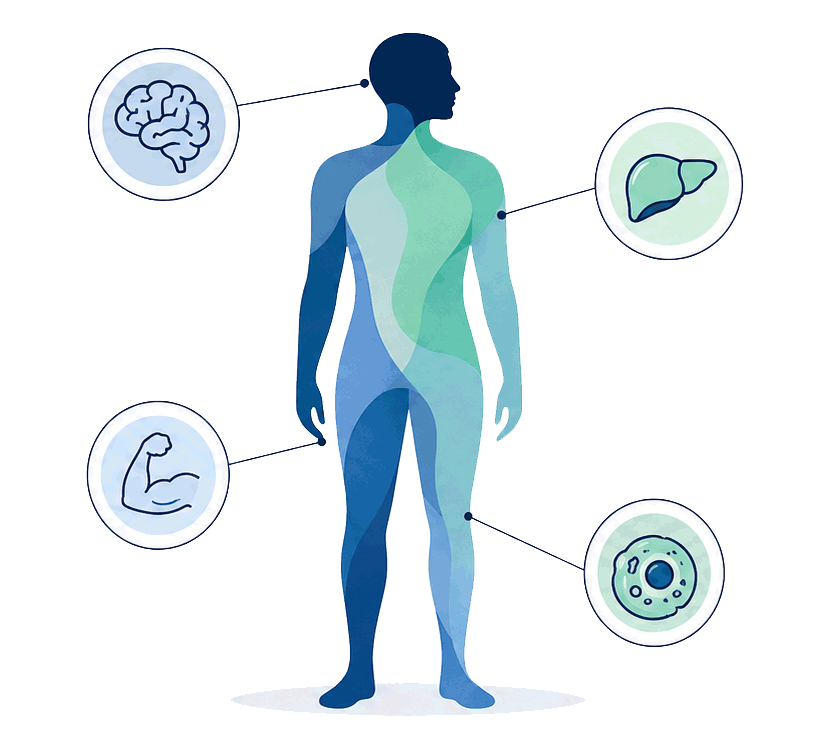
Brain & Nerves
Helps make acetylcholine, a messenger involved in memory, mood, and muscle control.
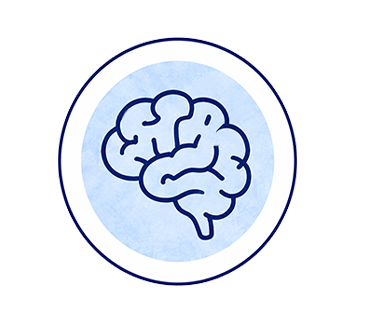
Liver
Helps move fat out of the liver and supports normal fat metabolism.
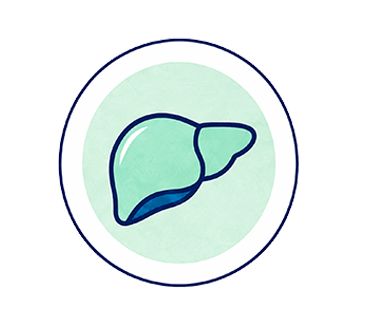
Muscle
Supports the nerve signals your muscles need to move.
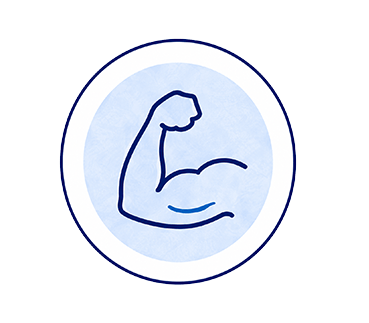
Every Cell
Helps build the membranes that surround and protect your cells.
DAILY NEEDS
How much choline do you need?
These values are Adequate Intakes, not a one-size-fits-all prescription.

Men 19+
Adequate Intake
550mg/day

Pregnancy 19+
Adequate Intake
450mg/day

Women 19+
Adequate Intake
425mg/day

Lactation 19+
Adequate Intake
550mg/day
Choline Facts
- Many prenatal vitamins lack sufficient choline, combining a balanced diet with food sources or an additional supplement is often necessary to meet these targets.
- Breast milk is naturally rich in choline, an essential nutrient that supports healthy brain development and a strong nervous system in babies.
- Choline is not officially classified as a vitamin, but it is grouped with the B-complex nutrients because it performs similar functions in the body’s cells.
Choline-Rich Foods
Compare the choline in common foods with the daily value.
Values are approximate and may vary by preparation. Bar lengths show the percentage of the 550 mg Daily Value.
EXPLORE THE RESEARCH
What happens to choline in your body?
Eating a nutrient is only part of the story. Researchers are studying how your body processes choline and how the resulting compounds relate to your risk of heart disease and diabetes.
What can blood choline tell us about heart health?
Researchers found that higher blood choline levels were linked to a greater risk of cardiovascular disease.
Two related compounds, betaine and TMAO, were not linked to risk overall. Among people with lower kidney function, however, higher TMAO was associated with greater risk, while higher betaine was associated with lower risk.
3,444
adults studied
19 years of follow-up
Research Sources:
CARDIA Study (2023 Oct 21)
Dietary Intake Biomarkers (2026 Feb)
Why it matters: Kidney function may help explain why these compounds have different relationships with heart health.
Does this mean choline-rich foods cause heart disease?
No. This study measured blood levels and observed health outcomes. It did not show that eating choline-rich foods causes heart disease. Blood choline levels are not the same as dietary choline intake.
Do choline-related compounds tell different stories?
Researchers followed adults who did not have diabetes at the start of the study. They found that:
- Higher blood betaine was linked to a lower risk of developing diabetes.
- Higher blood TMAO was linked to a higher risk.
- Blood choline itself showed no clear association with diabetes risk.
3,133
adults studied
15 years of follow-up
Research Sources:
CARDIA Study (2024 Nov 1)
Choline Insufficiency and Insulin Resistance (2026 Aug)
Why it matters: Compounds connected to the same nutrient can have different relationships with health.
What are betaine and TMAO?
Both are connected to choline metabolism, the processes your body uses to transform and use choline. Your body can convert choline into betaine. Gut bacteria and the liver help produce TMAO from choline and other dietary compounds. These findings do not establish that taking betaine supplements prevents diabetes.
Can blood samples reveal more than a food diary?
Researchers compared reported diets with patterns of small molecules in the blood called metabolites.
Blood patterns associated with less healthy diets generally showed stronger links to future diabetes and cardiovascular disease than food questionnaires alone.
Why it matters: These patterns may help researchers understand both what people eat and how their bodies process it.
ESSENTIAL QUESTIONS
Choline Q&A
Straightforward answers about daily needs, food sources, safety, and the role choline plays in your health.
What is choline and what does it do?
Choline is an essential nutrient that supports your brain, liver, muscles, and cells. It helps make acetylcholine, a chemical messenger involved in memory, mood, and muscle control, helps move fat out of the liver, supports muscle signaling, and helps build the membranes that surround your cells.
How much choline do I need each day?
For adults ages 19 and older, the Adequate Intake is 550 mg per day for men and 425 mg per day for women. During pregnancy, the recommended amount is 450 mg per day, and during lactation, it is 550 mg per day.
What foods have the most choline?
Beef liver contains the most choline, with about 356 mg in 3 ounces. Other good sources include egg yolks, beef, roasted soybeans, chicken, cod, potatoes, kidney beans, quinoa, and broccoli.
Can you take choline while pregnant?
Choline is especially important during pregnancy, when the recommended intake is 450 mg per day. Many prenatal vitamins do not contain enough choline, so food sources or an additional supplement may be needed, but we recommend talking with a healthcare professional before taking a choline supplement during pregnancy.
Are choline supplements safe to use?
You should try to meet choline needs primarily through food. Talk with a healthcare professional before taking a choline supplement, particularly during pregnancy or if you are managing a medical condition.
Can you get enough choline on a plant-based diet?
You can find choline in roasted soybeans, potatoes, kidney beans, quinoa, and broccoli. Depending on your diet and your unique needs, a plant-based diet may not meet all of your choline needs.
Do eggs have a lot of choline?
Yes. One large hard-boiled egg provides about 147 mg of choline, making eggs one of the richer food sources.
What are the side effects of too much choline?
High choline intake can cause fishy body odor, vomiting, sweating, low blood pressure, and liver toxicity. The adult upper limit is 3,500 mg per day from food and supplements combined.
Does choline help with memory and brain health?
Choline plays an important role in brain and nervous system function. It helps the body make acetylcholine, a chemical messenger involved in memory, mood, and muscle control, and NRI researchers also study how choline influences brain development and long-term health.
MEET THE EXPERTS
NRI Researchers

Carol L. Cheatham PhD
Associate Professor, Psychology and Neuroscience
Dr. Cheatham's research focuses on how nutrients affect brain development and function across the lifespan using brain imaging and behavioral assessments.

Sandra Mooney, PhD
Associate Professor of Nutrition
Dr. Mooney's research program investigates the effect(s) of environment and genes on brain development, with a focus on life-long effects of prenatal alcohol exposure.

Katie Meyer, ScD, MPH
Associate Professor of Nutrition
Dr. Katie Meyer is a nutritional and cardiovascular disease epidemiologist. Her research focuses on diet-related health behaviors and nutritional risk factors for cardiometabolic disease.

Susan M. Smith, PhD
Dickson Foundation – Harris Teeter Distinguished Professor of Nutrition
Dr. Smith's research investigates how genes and dietary factors interact to direct fetal outcome in alcohol-exposed pregnancies, and her work uses both animal models and clinical populations.
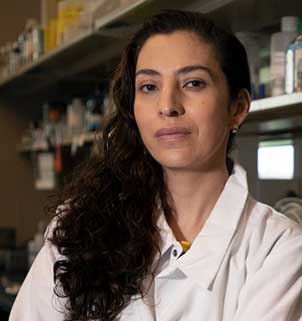
Isis Trujillo-Gonzalez, PhD
Assistant Professor of Nutrition

Steven H. Zeisel, MD, PhD
Professor Emeritus of Nutrition and Pediatrics, Founding Director of the NRI
Dr. Zeisel is an internationally recognized nutrition researcher whose work helped establish choline as an essential nutrient and advances understanding of nutrition, genetics, and brain development.
MEET THE EXPERTS
NRI Researchers
Carol L. Cheatham PhD
Associate Professor, Psychology and Neuroscience
Dr. Cheatham's research focuses on how nutrients affect brain development and function across the lifespan using brain imaging and behavioral assessments.
Sandra Mooney, PhD
Associate Professor of Nutrition
Dr. Mooney's research program investigates the effect(s) of environment and genes on brain development, with a focus on life-long effects of prenatal alcohol exposure.
Susan M. Smith, PhD
Dickson Foundation – Harris Teeter Distinguished Professor of Nutrition
Dr. Smith's research investigates how genes and dietary factors interact to direct fetal outcome in alcohol-exposed pregnancies, and her work uses both animal models and clinical populations.
Isis Trujillo-Gonzalez, PhD
Assistant Professor of Nutrition
Steven H. Zeisel, MD, PhD
Professor Emeritus of Nutrition and Pediatrics, Founding Director of the NRI
Dr. Zeisel is an internationally recognized nutrition researcher whose work helped establish choline as an essential nutrient and advances understanding of nutrition, genetics, and brain development.
WHAT THE SCIENCE SAYS
Insights from the NRI
Your liver makes a small amount, but not enough to meet all your needs. The rest must come from food.

SUPPLEMENTS AND SAFETY
Can you get too much?
Yes. High choline intakes can cause fishy body odor, vomiting, sweating, low blood pressure, and liver toxicity. The adult upper limit is 3,500 mg per day from food and supplements combined.
Start with food
Most people should meet nutrient needs primarily through food. Talk with a healthcare professional before taking a choline supplement, especially during pregnancy or when managing a medical condition.
The simple takeaway
Choline is essential, many people consume less than the recommended amount, and a varied diet can help. Your personal needs may be influenced by age, sex, pregnancy, lactation, genetics, and other nutrients in your diet.
WHY IT MATTERS
Why Precision Nutrition Matters
Everyone responds to food differently. Genetics, metabolism, lifestyle, environment, and the microbiome all influence how nutrients affect our health. Precision nutrition helps researchers move beyond one-size-fits-all advice toward approaches designed around the individual.
Stay Connected to NRI Research
Get the latest research news, expert insights,
and upcoming events delivered to your inbox.