May 22, 2019 | N Krupenko News, News
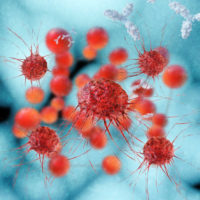
November 20, 2018 – Nutrient availability regulates cell metabolism, growth, and survival. When nutrients are in short supply, cells can pause their growth or even eliminate themselves through a process known as programmed cell death, thereby protecting the health of the organism as a whole. If nutrient deprivation happens at certain critical periods, such as during the rapid growth of the embryonic brain, severe developmental consequences can arise (this is why proper maternal nutrition is so important). In contrast, harnessing the innate ability of cells to enter programmed cell death is an important strategy in cancer treatment.
May 17, 2019 | Hursting News, News
October 3, 2018 – UNC NRI’s and UNC Lineberger’s Stephen Hursting, PhD, MPH, along with Cornelia Ulrich, PhD, MS, the director of the Huntsman Cancer Institute’s National Cancer Institute-designated Comprehensive Cancer Center, and colleagues, reviewed findings from research looking at the biological links between obesity and cancers of the colon, rectum, pancreas, liver, esophagus, gallbladder and stomach, as well as published studies on how diet, exercise, weight loss surgery, and other weight-related interventions may help reverse this connection.

May 12, 2019 | Hursting News, News
August 30, 2018 – While the link between obesity and breast cancer risk is well known, the underlying mechanisms are not fully understood. Obesity alters many conditions in cells and within the body, and it is not easy to determine which of these conditions are important to the obesity-cancer link. Consequently, it is very difficult to identify potential therapeutic targets.
April 23, 2018 | Hursting News, News
April 26, 2018 -About one third of cancer cases are estimated to be linked to dietary and other modifiable risk factors, especially for obesity-related cancers such as breast, colorectal, ovarian, endometrial, kidney, gallbladder, esophageal, and pancreatic cancers. In this special theme issue of the Journal of the Academy of Nutrition and Dietetics, food and nutrition practitioners and other health professionals take an in-depth look at the relationship between nutrition, obesity, and cancer prevention, treatment, and survival and identify research gaps for future prevention research efforts.
September 26, 2017 | News
September 28, 2017 One of the ways the body controls the overall number of cells is by initiating a preprogrammed cell death routine, known as apoptosis, in damaged or otherwise unnecessary cells. Apoptosis allows elimination of cells without induction of an autoimmune response. A hallmark of many types of cancer cells is a resistance to apoptosis; hence, tumors continue to grow and metastasize. Finding ways to defeat this resistance in cancer cells is an area of active research.
July 12, 2017 | News
June 27, 2017 • That morning or midday beverage may have a greater effect on our genes than previously thought, especially if you happen to be female and consume tea on a regular basis. New evidence from a group of investigators at Uppsala University shows that tea consumption in women leads to epigenetic changes in genes that are known to interact with cancer and estrogen metabolism. Findings from the new study were published recently in Human Molecular Genetics in an article entitled “Tea and Coffee Consumption in Relation to DNA Methylation in Four European Cohorts.”
April 26, 2017 | Community News, News, Zeisel News
May 1, 2017 • Many of the genes we study at the NRI are involved in nutrient metabolism. One of the ways we can learn about what a gene does is to delete it in an animal model and then see how the gene-deleted animals differ from normal animals. By observing how disruption of a gene affects an animal’s growth, development, and health, we can develop insights into […]
January 24, 2017 | Hursting News, News, S Krupenko News
February 1, 2017 • It is generally known that folate (vitamin B9) is important in early pregnancy to prevent neural tube defects in babies, because folate is needed by rapidly dividing cells (e.g., those of a developing embryo) for DNA synthesis and cellular energy production. As a consequence, many processed foods in the United States are fortified with […]
