
A New Approach to Nutrition, Centered on You
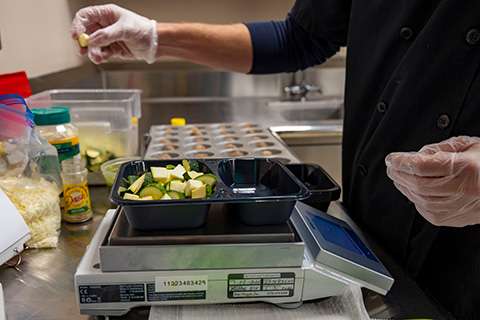
You may have heard the term “precision nutrition” before. But at the UNC Nutrition Research Institute (NRI), it is more than a concept, it is a shift in how we understand food, health, and the human body. While nutrition advice has traditionally followed a one-size-fits-all approach, NRI researchers are uncovering a far more complex reality, one where individuals can respond very differently to the same foods.
For many of us, nutrition has always come with general advice, guidelines built on the idea that what works for one person should work for everyone. Yet many people have experienced the frustration of following the same diet as someone else and seeing very different results. At the NRI, researchers are approaching nutrition from a different starting point: nutritional needs differ between individuals. The real question is why.
At the NRI, this question is driving the development of precision nutrition, an approach that replaces one-size-fits-all recommendations with strategies tailored to the individual. Precision nutrition recognizes that our genes, metabolism, gut microbiome, and environment all shape how we respond to food. Instead of asking, “What is the right diet?” researchers are asking, “What is the right diet for you?”—a shift that has the potential to make nutrition guidance more effective, more sustainable, and more relevant to everyday life.
This work is not happening in isolation. The NRI’s 16 faculty scientists and their teams collaborate across interconnected areas of research, bringing together biology, behavior, and community perspectives. Their work spans everything from molecular science to clinical studies and real-world interventions, ensuring that discoveries made in the lab can translate into meaningful improvements in how people live, eat, and manage their health.
One critical area of focus is how people adopt and sustain healthy behaviors. Deborah F. Tate, PhD, NRI Interim Director, leads innovative behavioral and digital health interventions that help individuals adopt sustainable nutrition and weight-related behaviors. In a recent study, her team demonstrated that when technology is paired with personalized coaching, individuals can achieve meaningful weight loss and maintain healthier habits over time. This work, alongside Rachel Goode, PhD, MPH, LCSW’s community-engaged research, highlights that effective nutrition strategies must reflect people’s lived experiences. Even the most precise recommendation will only work if it fits into someone’s daily life.
NRI researchers are also studying how nutrition shapes health across the lifespan and in response to environmental exposures. Sandra Mooney, PhD, Susan Smith, PhD, and Nipun Saini, PhD, examine prenatal alcohol exposure and its effects on brain and metabolic development, with findings suggesting that targeted nutrients like choline may help protect the developing brain. At the molecular level, Sergey Krupenko, PhD, investigates how disruptions in one-carbon metabolism contribute to cancer and other diseases, emphasizing that even essential nutrients like folate must be carefully balanced. Building on this work, Blake Rushing, PhD, is identifying how cancer cells depend on specific nutrients, opening the door to more targeted approaches that may one day improve treatment strategies.
What makes the UNC Nutrition Research Institute unique is how these areas come together. From molecules to communities, and from early development through aging, researchers are working toward a shared goal: moving beyond generalized nutrition advice to deliver personalized strategies that improve health. That is precision nutrition, and it is the work happening every day at the NRI.