
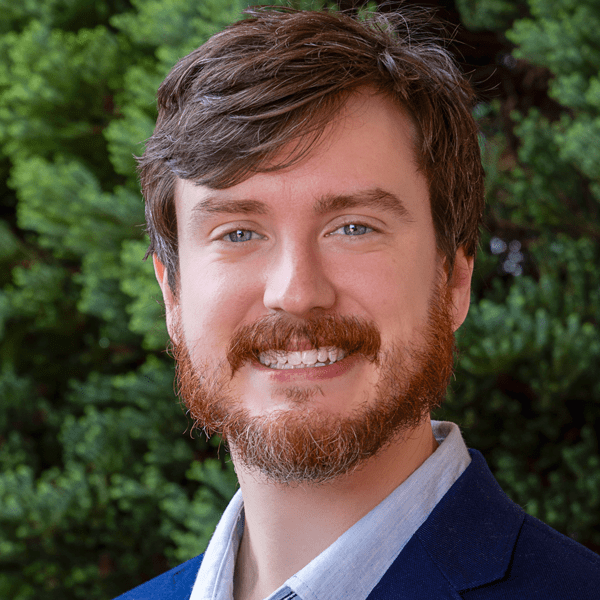
Blake Rushing, PhD
Assistant Professor of Nutrition
blake_rushing@unc.edu
704-250-5089
Blake Rushing, PhD, is an Assistant Professor at the University of North Carolina at Chapel Hill’s Nutrition Research Institute (NRI), where his lab applies multi-omics approaches to investigate the metabolic mechanisms underlying cancer and other chronic, age-related diseases. His research leverages analytical chemistry techniques such as liquid chromatography-mass spectrometry to study how nutrient metabolism can inform disease progression, therapy resistance mechanisms, and biomarker development.
Currently, Dr. Rushing is leading pan-cancer projects that integrate metabolomics and other omics data (e.g., genomics, transcriptomics, proteomics, lipidomics) to identify dysregulation of nutrient metabolism that is both common and unique across cancer types, and how this is linked to one’s genetic features. These efforts aim to advance precision oncology by uncovering new pharmacological and nutritional strategies for cancer prevention, detection, and treatment.
Dr. Rushing also serves as the Associate Director of NRI’s Metabolomics and Exposome Laboratory (MEL), where he supports single and multi-omics precision health projects as part of major NIH-funded initiatives, including the Human Health Exposure Analysis Resource (HHEAR) and Nutrition for Precision Health (NPH) programs. In this role, he also supports many additional metabolomics projects internal and external to UNC.
Dr. Rushing earned a BS in Chemistry from Catawba College and a PhD in Pharmacology and Toxicology from East Carolina University. Dr. Rushing is also a member of the UNC Lineberger Comprehensive Cancer Center and holds and adjunct appointment in UNC’s Department of Pathology & Laboratory Medicine.
Rushing's Team



In the News
Publications
2026
2025
Non-redundant roles for paralogous proteins in the yeast glucose-sensing pathway
Association of metabolomics measurements with blood cell phenotypes
Multi-omics signature of healthy versus unhealthy lifestyles reveals associations with diseases
Impact of prenatal phthalate exposure on newborn metabolome and infant neurodevelopment
An untargeted metabolomic analysis of acute AFB1 treatment in liver, breast, and lung cells
2023
Rajasekar AK, Miller GM, Motsinger-Reif A, Cui Y, Walker D, Makris K, Jarmusch A, Rushing BR, Juarez P, Hood D, Ramesh A, Mouton C, Soliman G, Chung MK. Establishing a Community of Practice for Exposomics. Exposome. 2023. Under Review
†Authors contributed equally to this work
2022
†Authors contributed equally to this work
†Authors contributed equally to this work
†Authors contributed equally to this work
2021
2020