

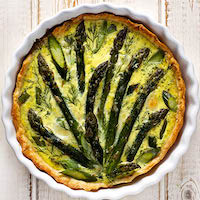
Asparagus Quiche
Recipe by Chef Megan Lambert, Senior Instructor at Johnson & Wales University, Charlotte, NC. Asparagus Quiche Yield: 8 servings Springtime means beautiful fresh asparagus in the garden or at the farmer’s market. There is just no comparison between fresh spring...Li Uses Metabolomics to Study Diabetes
Yuanyuan Li, PhD, a member of the Sumner Lab at the UNC Nutrition Research Institute (NRI), has been published in Archives of Toxicology with her manuscript titled “Exposure to inorganic arsenic and its methylated metabolites alters metabolomics profiles in INS-1...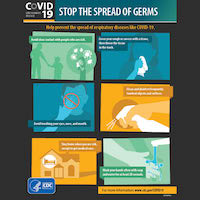
Managing in an Uncertain Time
As the novel coronavirus COVID-19 affects all our lives, we at the Nutrition Research Institute are taking every measure to flatten the curve of infection by strictly following guidelines set down by the University, our local jurisdictions, and the state. According to...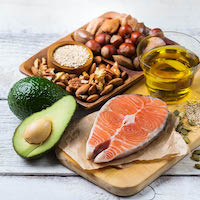
Are All Fats Bad?
Following up on the popular Appetite for Life presentation by Cecilia Kwan, PhD, RD, in February, we present the first in a series of articles on popular myths about whether certain foods are good or bad to eat. For a long time in recent decades, dietary fat has been...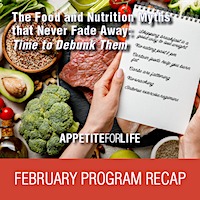
February AFL Program Recap: “Food and Nutrition Myths That Never Go Away: Time to Debunk Them”
February 26, 2020 – If you missed February’s Appetite for Life Presentation by Cecilia Kwan, PhD, RD, you can catch up. Click through to this post and watch the entire program on video. The live presentation took place at Rowan-Cabarrus Community College in Kannapolis on Thursday, February 19, 2020.